Discover the Cyclades
Businesses, flavours and experiences across all the islands — choose a category.






Are you a business in the Cyclades?
List it for free and showcase it to thousands of visitors.
List now →
Businesses, flavours and experiences across all the islands — choose a category.
List it for free and showcase it to thousands of visitors.
List now →
Businesses, flavours and experiences across all the islands — choose a category.
List it for free and showcase it to thousands of visitors.
List now →
The island Elytis loved — a hidden setting for novelistic heroines
According to myth, Sikinos took its name from Sikinos, son of the king of Lemnos Thoas and the nymph Oinoi; until then the island was called Oinoi, "the wine-rich one", because of its abundant viticulture. Sikinos's reputation as a place of wine accompanied the island throughout antiquity.
In ancient times the island was inhabited by Ionians and enjoyed an autonomous life, minting its own coins. In the Roman era the impressive monument of Episkopi was built — a temple-mausoleum most likely dedicated to Apollo Pythios, which remains the island's most important ancient building.
In the Byzantine and medieval years, the threat of pirates drove the inhabitants to fortify themselves high up, away from the sea: this is how Kastro was created, with houses in a continuous, defensive layout. The temple of Episkopi was converted into a Christian church of the Panagia, while in the 17th century the fortified Monastery of Zoodochos Pigi was built.
Under Ottoman rule and after incorporation into the Greek state, Sikinos remained a poor but authentic agricultural island, with an economy based on wine, pulses and livestock farming. In more recent times, despite emigration and a small population, the island retained its quiet character — and in recent decades it has been reviving its vineyards and being rediscovered as a destination for those seeking the genuine Cyclades.
Monasteries, castles, ancient towns and hiking routes.
The landmark of Sikinos and one of the most important monuments in the Cyclades. It is a Roman temple-mausoleum (possibly dedicated to Apollo Pythios), exceptionally well preserved, which in Byzantine times was converted into a church of the Panagia — hence the name "Episkopi".
The fortified medieval core of Chora, where the houses were built in a continuous layout to function as a wall against pirates. The church of Pantanassa dominates its paved square.
A fortified 17th-century monastery, built like a fortress at the highest point of Chora; from its courtyard the view embraces the whole southern Aegean.
Ruins of an ancient fortification/acropolis in a commanding position, evidence of the island's habitation since antiquity.
The main church in the central square of Kastro, heart of the religious and social life of the old settlement.
Housed in an old traditional olive press, it showcases the island's agricultural and winemaking life with tools, wine presses and everyday objects.
The old stone windmills above Chora, symbols of the older agricultural economy that ground the local wheat.
On terraces around Episkopi and Chora, the revived vineyards continue the tradition of ancient Oinoi, the "island of wine".
A network of waymarked stone paths connects Chora with Episkopi, the harbor and secluded coves — the best way to get to know the island.
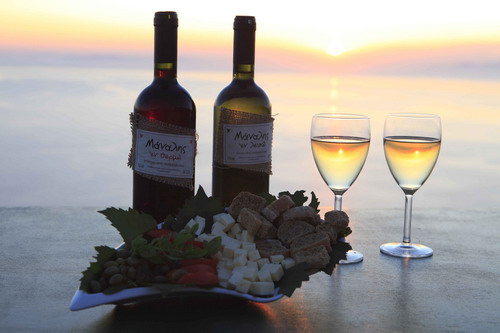
The gastronomy of Sikinos is simple, local and authentic — based on the wine of the revived vineyards, on pulses, on thyme honey and on fresh fish from the harbor.
Accommodation, restaurants, activities and local products of the island.
Locations come live from the official Cyclades business directory.
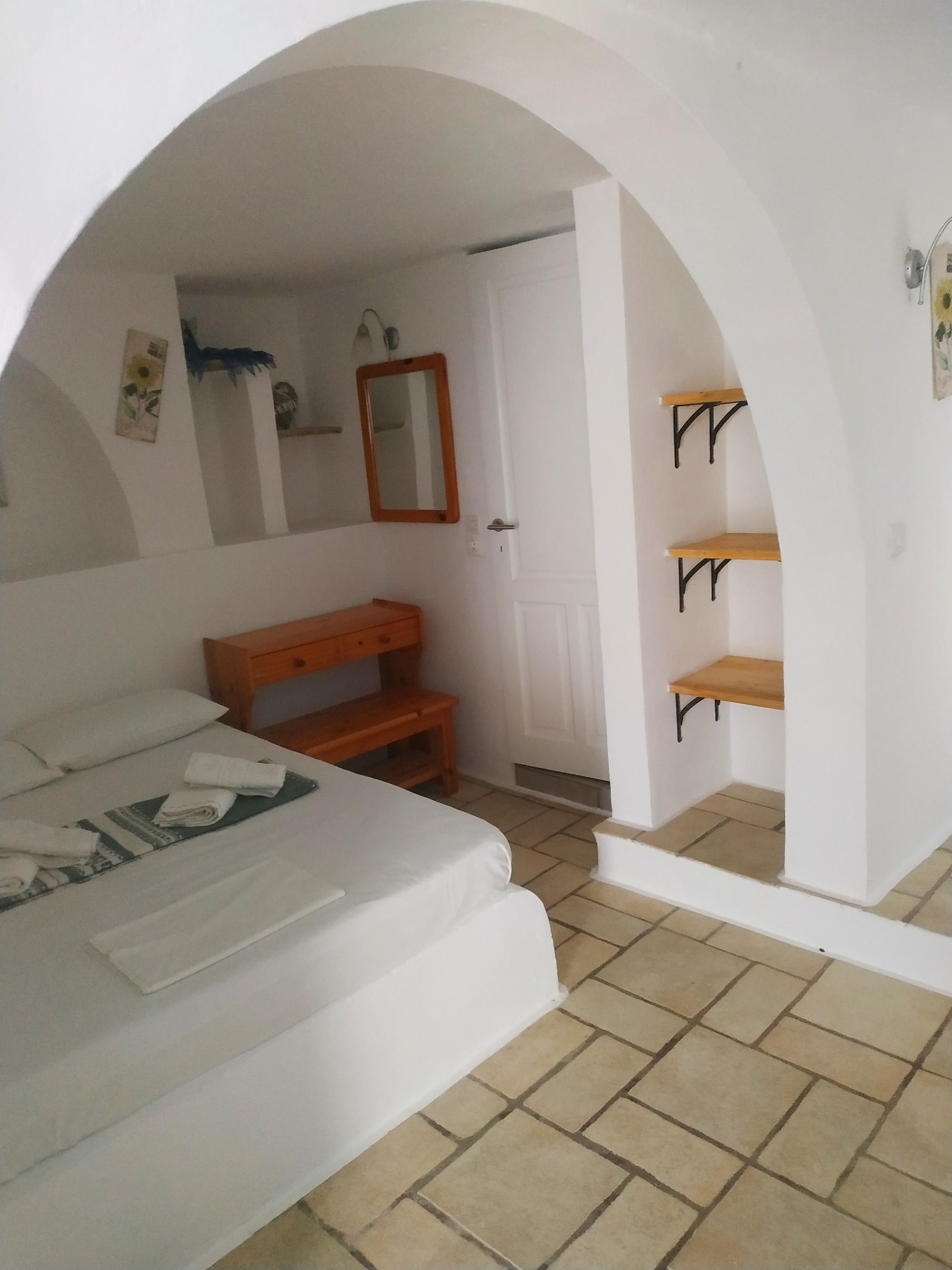 Accommodation
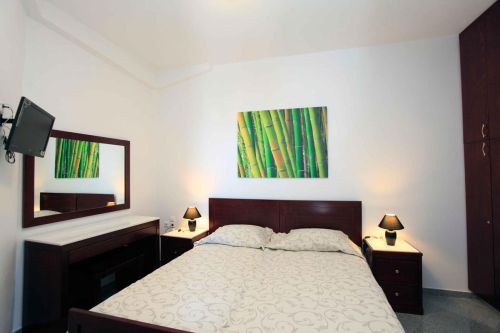 Accommodation
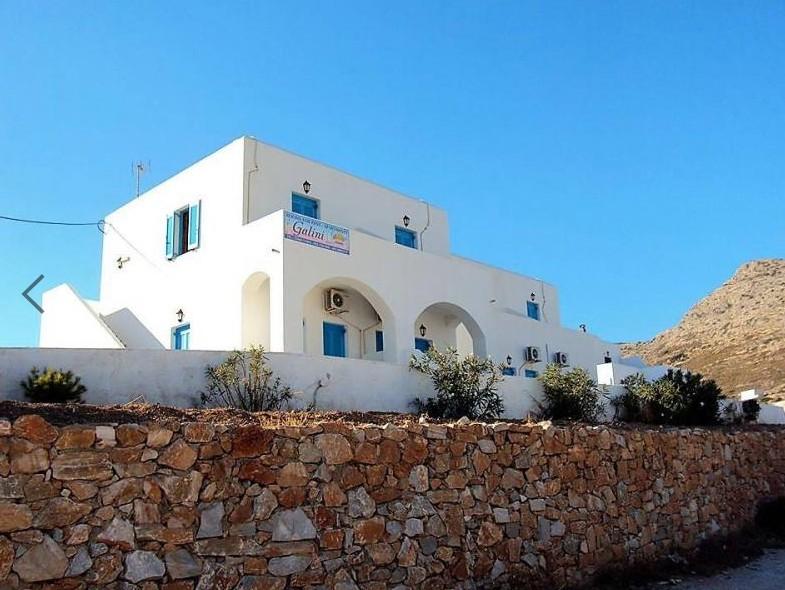 Accommodation
 Accommodation
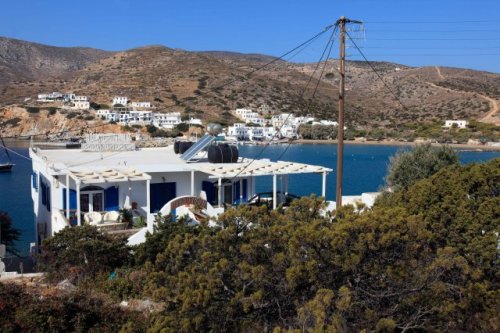 Accommodation
 Accommodation
 Accommodation
 Accommodation
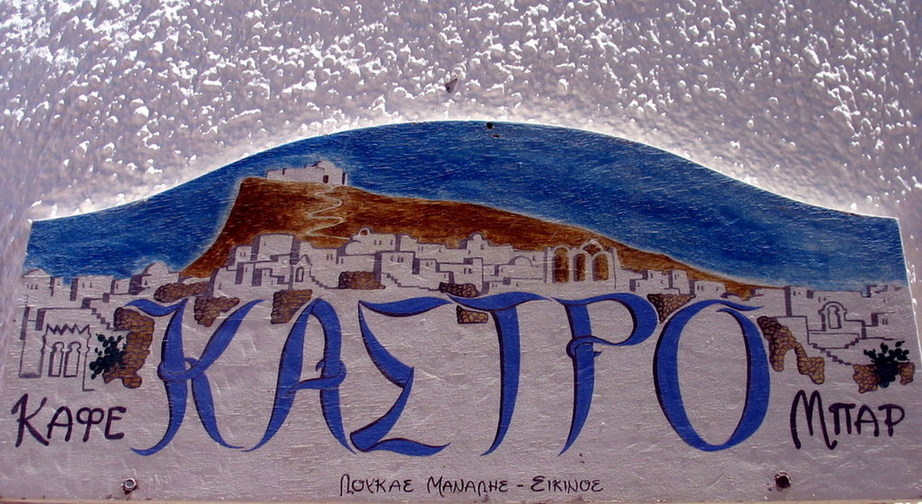
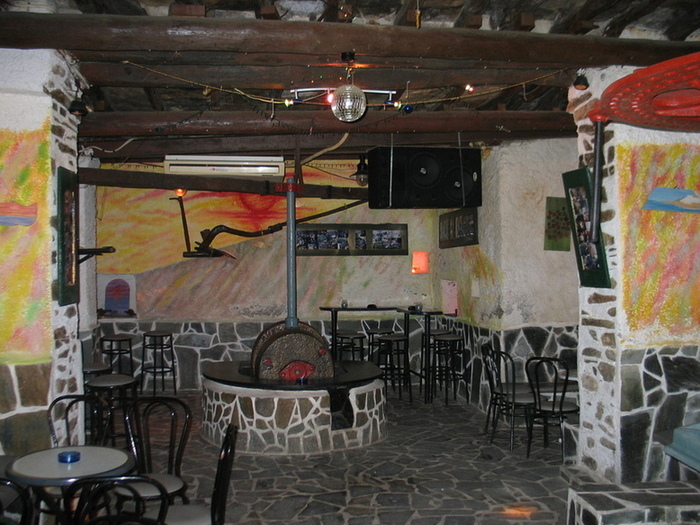
 Entertainment
 Entertainment
 Entertainment
 Local Products
The beach at the harbor, with fine sand, shallow waters and tamarisk trees for shade — the island's most easily accessible and family-friendly beach.
A beautiful, quiet sandy beach in the north of the island, in a picturesque bay with clear waters.
A small, peaceful beach near Alopronia, with shallow waters and a namesake little chapel beside it.
A small, calm cove near the harbor, with pebbles and clear waters — ideal for a relaxing swim.
A hidden cove with pebbles and deep, crystal-clear waters — reached by path or boat, far from everything.
A secluded, wild beach in the northern part of the island, for those seeking absolute isolation.
A secluded sandy beach reached mainly by boat from the harbor — pristine, quiet and sheltered.
A quiet, picturesque sandy beach with a little church on the northern side of the island, in clear, shallow waters.
A small, calm pebble cove near Alopronia with an open view towards Santorini — from which it takes its name.
A secluded, wild pebble beach with crystal-clear waters, accessible by path or boat — for those seeking absolute quiet.
Sikinos has no airport. Its harbor, Alopronia, is connected by ferry with Piraeus (about 5–10 hours, depending on the route) and with neighboring islands such as Ios, Folegandros, Santorini, Naxos and Paros — ideal for island hopping in the Southern Cyclades.
A local bus connects Alopronia with Chora and Episkopi. For the remote beaches, visitors use the paths, boat routes from the harbor, or a rented two-wheeler.
Combine Sikinos with the neighbouring Cyclades.
Plan your own trip to Sikinos, day by day, tailored to you — with the help of the aiTripPlanner.