Discover the Cyclades
Businesses, flavours and experiences across all the islands — choose a category.






Are you a business in the Cyclades?
List it for free and showcase it to thousands of visitors.
List now →
Businesses, flavours and experiences across all the islands — choose a category.
List it for free and showcase it to thousands of visitors.
List now →
Businesses, flavours and experiences across all the islands — choose a category.
List it for free and showcase it to thousands of visitors.
List now →
Absolute tranquility under a starlit sky
Donousa has been inhabited for thousands of years. Finds from the Early Cycladic period (3rd millennium BC) attest to human presence as early as the dawn of Cycladic civilization, when the small islands of the Aegean served as waypoints along the sea routes between Naxos, Amorgos and the rest of the Cyclades.
The island's most important archaeological monument is the fortified Geometric settlement at Vathy Limenari (9th–8th century BC), near Mersini — a well-preserved testimony to life in early historical times. According to local tradition, the island's name is linked to Dionysus, who, as the myth goes, hid Ariadne here to protect her from Theseus.
In medieval and later times, Donousa followed the fate of the Small Cyclades: sparsely populated and exposed to pirate raids, it often served as a refuge for shepherds and fishermen from neighboring Amorgos and Naxos. Permanent residents settled steadily mainly in more recent centuries, living from fishing, animal husbandry and small-scale farming.
For decades the island remained cut off, with difficult access and minimal infrastructure — a fact that preserved its authentic character untouched. Today, with a few dozen permanent residents and a warm community, Donousa lives off fishing and a gentle, alternative tourism that seeks exactly what the island offers: tranquility, nature and genuine hospitality.
Monasteries, castles, ancient towns and hiking routes.
On the eastern coast, near Mersini, the ruins of a fortified Geometric-era settlement (9th–8th century BC) survive — one of the most important archaeological monuments of the Small Cyclades, testifying to the island's continuous habitation.
An impressive sea cave on the northern coast, accessible by caique or by swimming, with a natural rock 'window' through which light passes.
A sea cave where the protected Mediterranean monk seal (Monachus monachus) takes refuge — evidence of the island's pristine, untouched marine environment.
The famous spring with running water amid plane trees, above the settlement of Mersini — a rare feature on the arid islands of the Cyclades and a spot for coolness and rest.
The island's central church in Stavros, from which the main settlement took its name; it celebrates its feast on September 14th with a village-wide festival.
An uninhabited rocky islet opposite Kalotaritissa, a refuge for seabirds, which picturesquely closes off the island's northern horizon.
Marked trails cross the entire island, connecting the four settlements with isolated beaches — the best way to get to know Donousa.
Thanks to minimal light pollution, Donousa offers one of the clearest night skies in the Aegean, with the Milky Way visible to the naked eye.
An impressive sea cave on the northwestern coast of Donousa, with high rocky walls, accessible mainly by caique — a wild, remote landscape.
A picturesque chapel of the Virgin Mary near Stavros, one of the many little churches that adorn the island's hills and shores.
A small chapel of St John in the island's countryside, with plain Cycladic architecture and a view over the open sea.
The chapel of Agia Sofia in the lush green settlement of Mersini, near the village's famous spring.
Donousa's cuisine is simple, sea-based and authentic — built on fresh fish from local fishermen, animal husbandry products and traditional recipes passed down from generation to generation.
Accommodation, restaurants, activities and local products of the island.
Locations come live from the official Cyclades business directory.
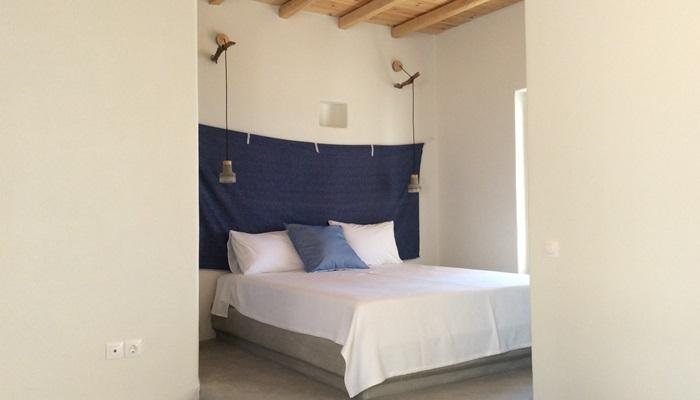 Accommodation
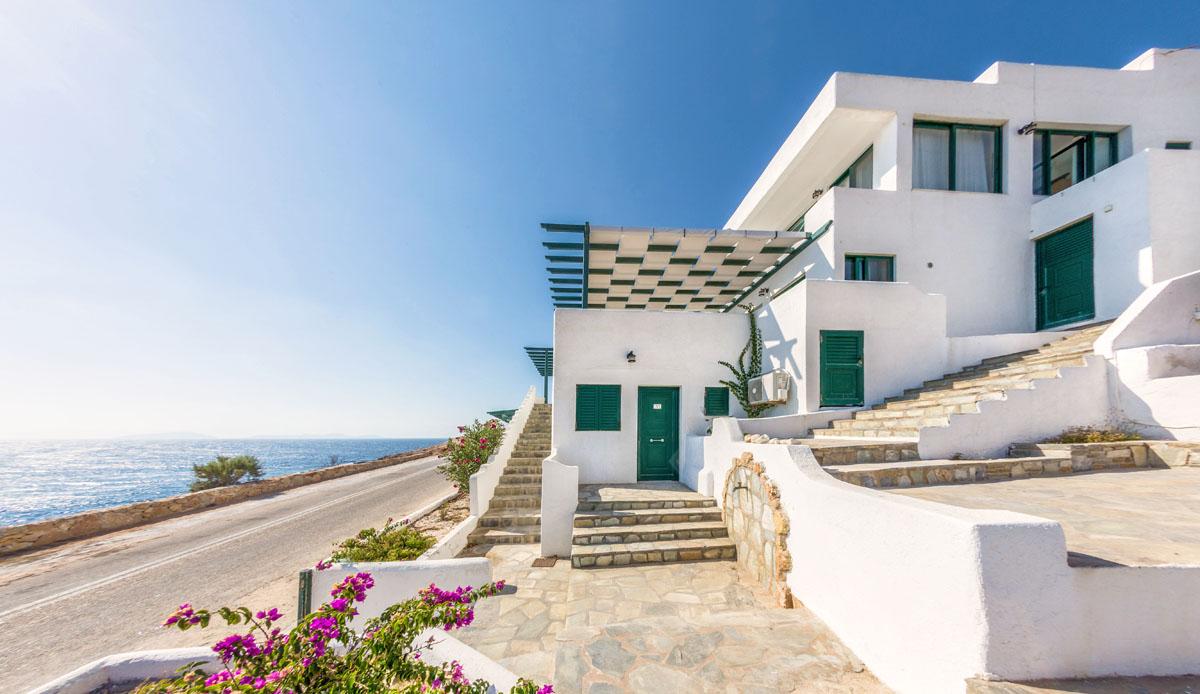 Accommodation
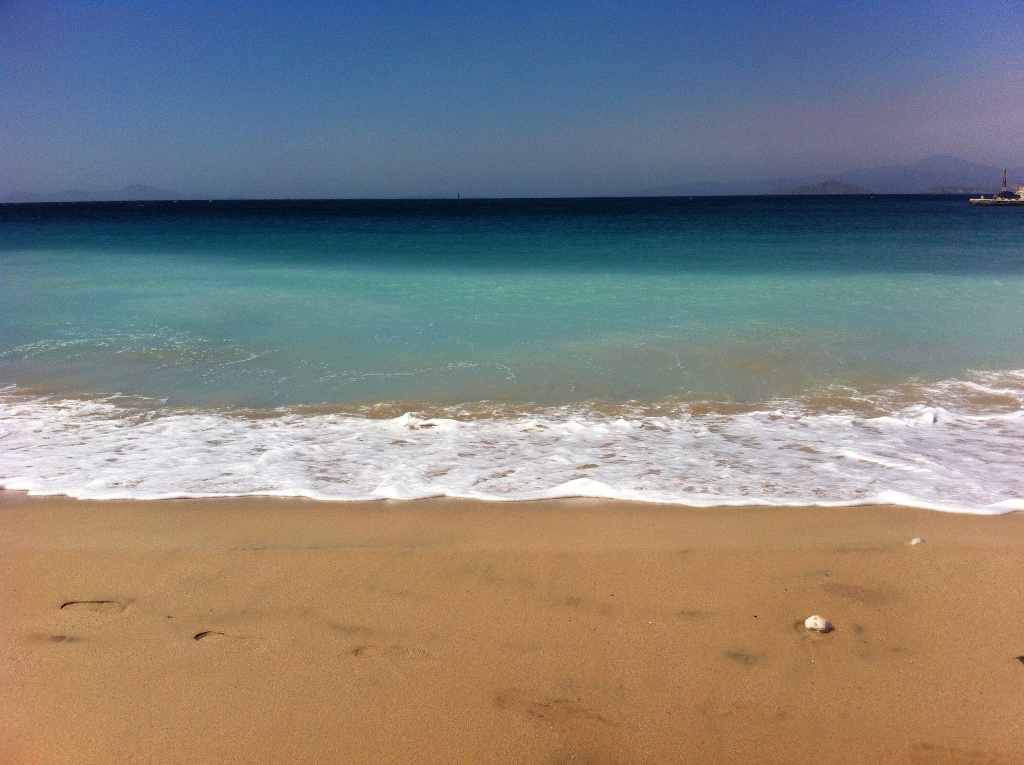 Accommodation
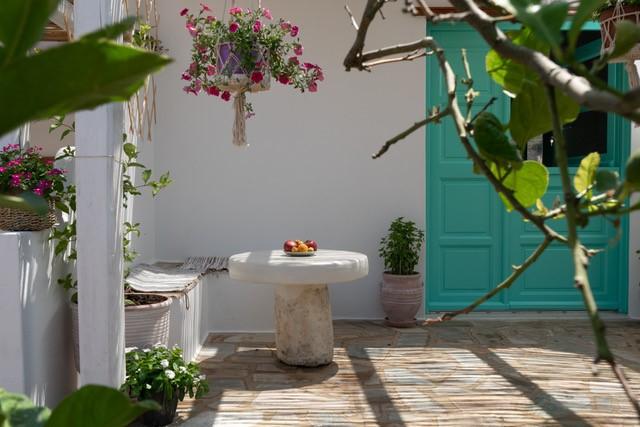 Accommodation
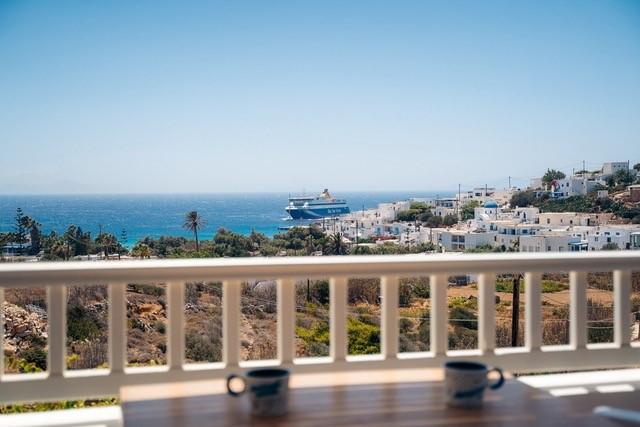 Accommodation
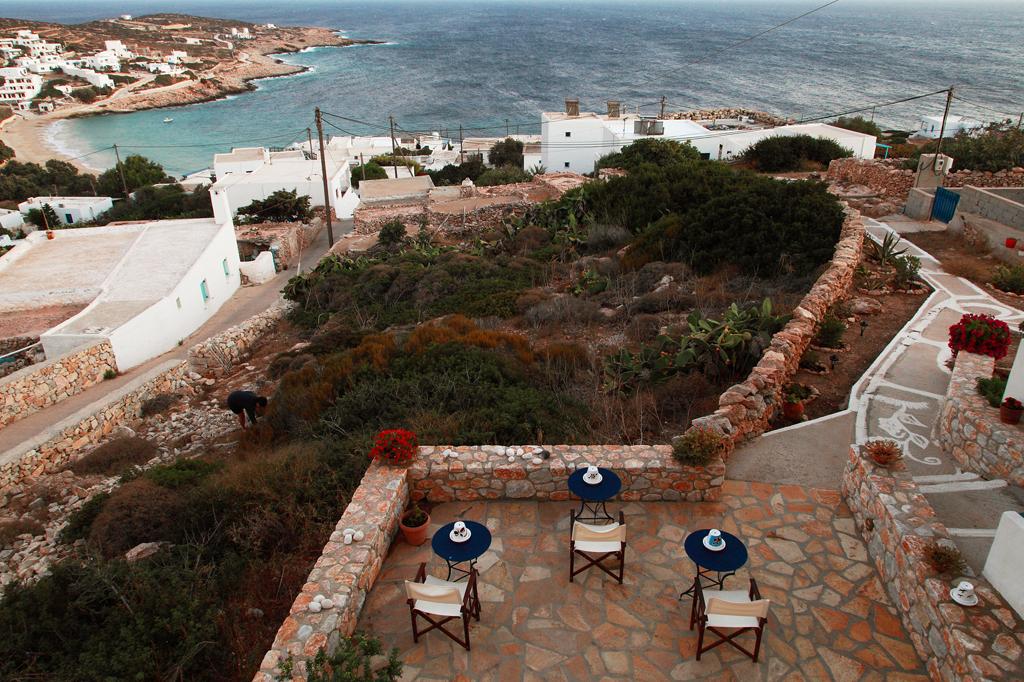 Accommodation
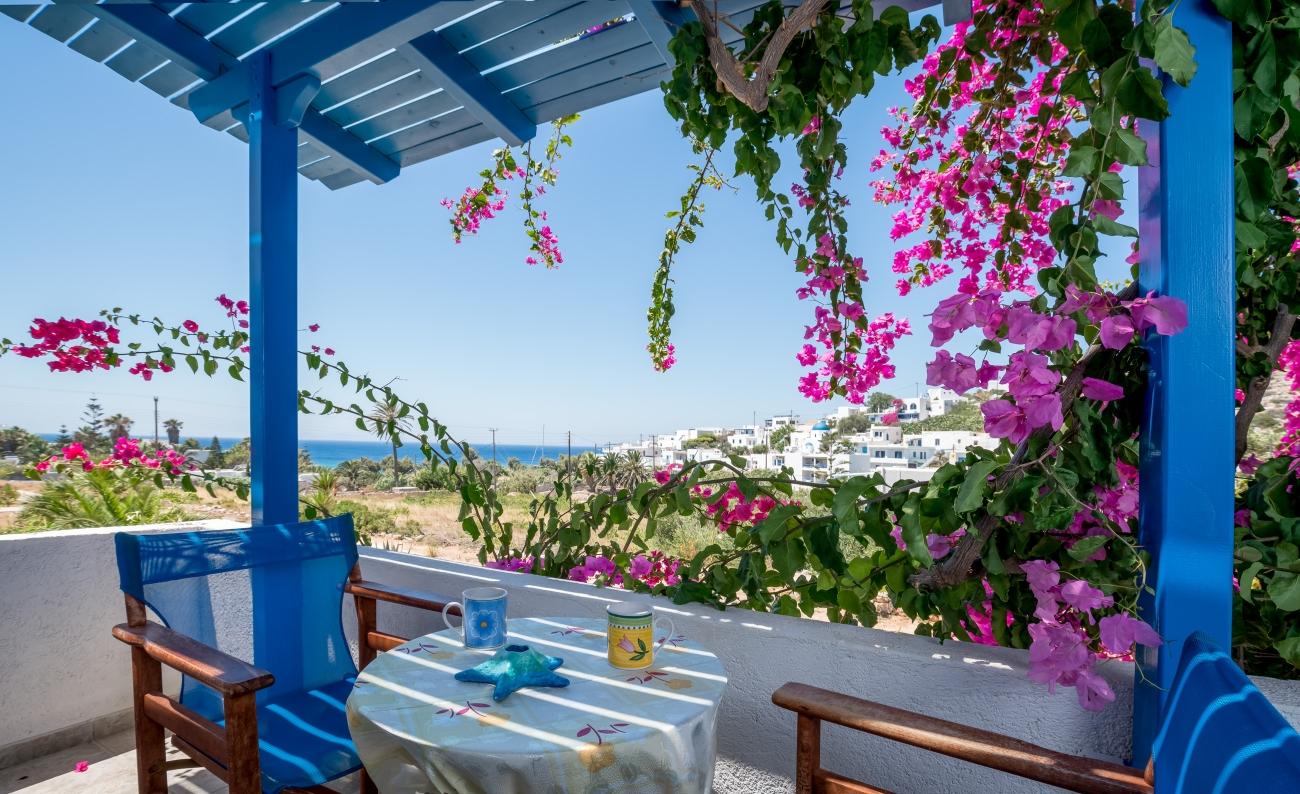 Accommodation
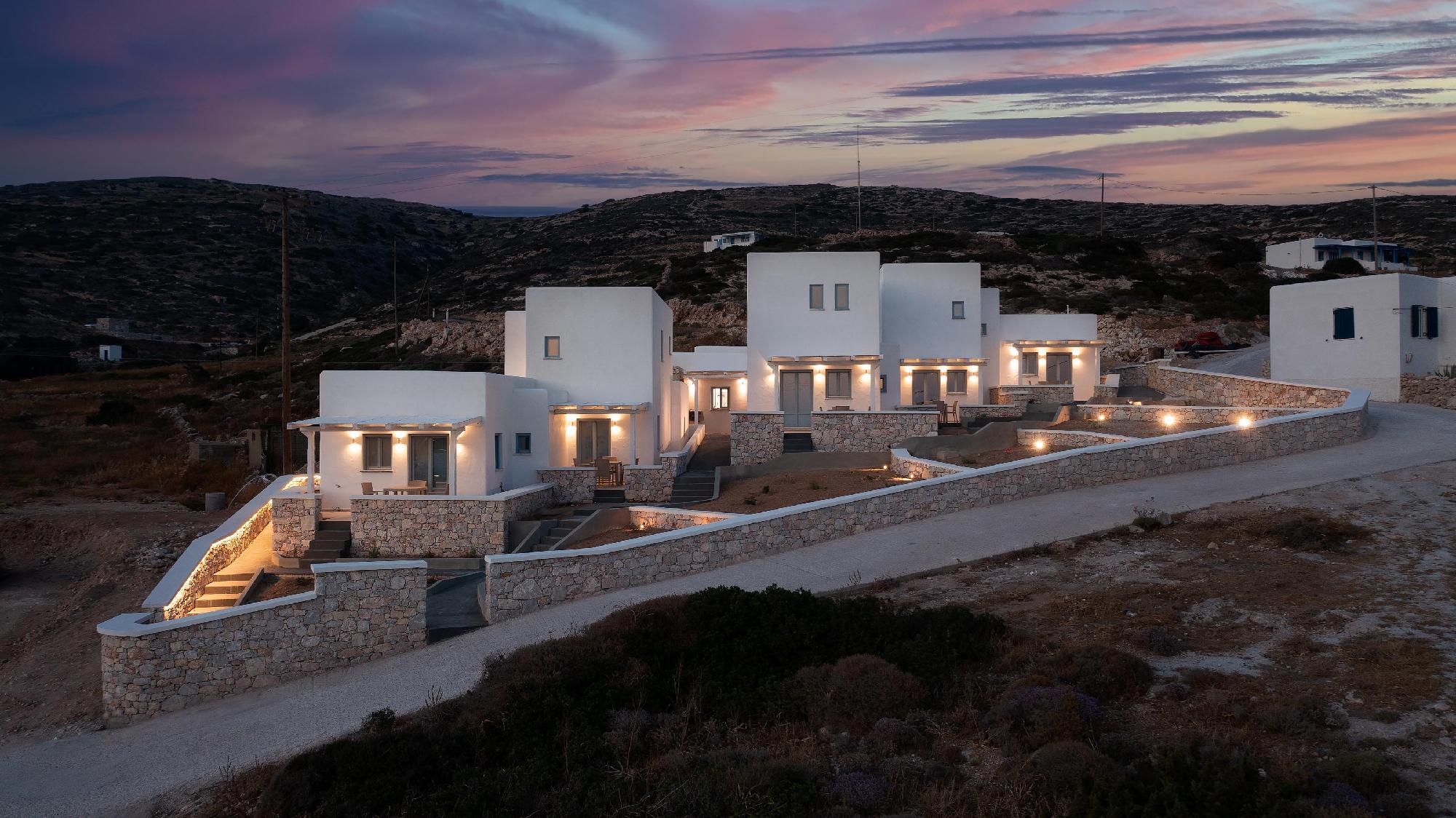 Accommodation
The island's most famous beach — a sheltered stretch of sand with tamarisk trees, golden sand and exotic turquoise waters, within walking distance of Stavros.
The central beach next to the port, with sand and shallow waters right in the village — the most convenient for a swim with all amenities nearby.
A quiet, secluded stretch of sand between Kedros and Mersini, reached on foot — ideal for those seeking solitude.
Below the lush green settlement of Mersini, a small cove with pebbles and clear waters, next to the village's famous spring.
In the fishing settlement of the same name at the island's northern tip, with sand, caiques and a view of the islet of Skoulonisi opposite.
A remote sandy stretch near Charavgi, in the western part of the island — a pristine corner for absolute calm.
A remote cove in the northern part of the island, reached by trail or caique, with crystal-clear and often sheltered waters.
A secluded, deep cove in the east, accessible mainly by caique — nearby lies the ancient Geometric settlement.
A quiet, secluded sandy beach near Kalotaritissa, reached by a short hike — a favorite of those seeking solitude.
Donousa has no airport. Stavros is served by the Small Cyclades ferry line and is connected to Piraeus (often via Naxos), as well as to the other Small Cyclades islands and Amorgos — connections are sparser in winter and more frequent in summer.
The island is small and explored mainly on foot, via the network of marked trails; for the more remote beaches there is caique service, while vehicle rentals are very limited.
Combine Donousa with the neighbouring Cyclades.
Plan your own trip to Donousa, day by day, tailored to you — with the help of the aiTripPlanner.