Discover the Cyclades
Businesses, flavours and experiences across all the islands — choose a category.






Are you a business in the Cyclades?
List it for free and showcase it to thousands of visitors.
List now →
Businesses, flavours and experiences across all the islands — choose a category.
List it for free and showcase it to thousands of visitors.
List now →
Businesses, flavours and experiences across all the islands — choose a category.
List it for free and showcase it to thousands of visitors.
List now →
The wild diamond of the Cyclades
The name Folegandros is attributed by mythology to a son of the king of Crete, Minos, named Folegandros, considered the island's first settler; another version links the name to the Phoenician word for rocky, stony ground. Traces of habitation date back to prehistoric times, and the island's wild, fortress-like landscape shaped its fate from early on.
In antiquity Folegandros was inhabited by Dorians and later came under Athenian influence. Because of its isolation and rugged terrain, the Romans used it as a place of exile — a use that recurred in more recent times. At Chrysospilia, ancient inscriptions attest to cult activity as far back as classical times.
In Byzantine and medieval times the island suffered from pirate raids. After the Fourth Crusade, in 1207, it passed to the Venetians and was incorporated into the Duchy of the Aegean under Marco Sanudo; it was then that the settlement of the Kastro was fortified on the edge of the cliff, with its houses forming a continuous wall for protection.
In 1566 Folegandros passed to the Ottoman Empire, continuing to suffer pirate raids until the 18th century. It was incorporated into the Greek state after the Revolution of 1821, and in the 20th century it was again used as a place of exile. Thanks to the measured, gentle tourism of recent decades, the island has kept its authentic, tranquil character untouched.
Monasteries, castles, ancient towns and hiking routes.
The Church of the Dormition of the Theotokos stands atop a rock above the Chora, likely built on the site of an ancient temple using ancient building material. It is reached via a zig-zagging uphill path that rewards with a mesmerizing view, while on Easter night its icon is carried in procession through the villages in a great festival.
The medieval settlement of the Chora (13th century), built on the edge of the cliff in the time of Marco Sanudo, with its two-storey houses forming a protective wall against pirates. Within its narrow, arched alleys hide small chapels and wooden balconies full of flowers.
An impressive sea cave on the precipitous north coast, below Panagia, with stalactites and ancient inscriptions carved into its walls — evidence of ancient cult use. It is accessible only by boat and in good weather conditions.
A stone lighthouse from 1919 at the southwestern tip of the island, a romantic spot with a panoramic view of the open sea, ideal for sunset at the end of a beautiful walk.
Housed in a traditional themonia in Ano Meria, it recreates the everyday rural life of old Folegandros — with tools, a wine press, an oven and household items from a self-sufficient island community.
The Chora unfolds around five successive, shaded squares (Pounta, Piatsa, Kontarini, Maroula) linked to one another by arches — the heart of evening life, beneath plane trees and bougainvillea.
The church of Ano Meria where, at the end of July, the island's biggest festival is held, with traditional food, music and dancing — one of the liveliest moments of the summer.
The scattered stone farmhouses of Ano Meria, with stable, threshing floor, wine press and oven, form a living open-air monument to the traditional rural architecture of the Cyclades.
A rich network of marked trails links the Chora, Ano Meria, Aspropounta and the remote beaches, often following ancient cobbled routes — the best way to get to know the island's wild landscape.
Beyond being a port, Karavostasi retains the charm of a small seaside settlement, with the surrounding beaches and the boats that set off for the inaccessible southern coves.
Folegandros's cuisine is simple, authentic and flavorful, based on the products of its barren yet generous land and on fresh fish from the Aegean.
Accommodation, restaurants, activities and local products of the island.
Locations come live from the official Cyclades business directory.
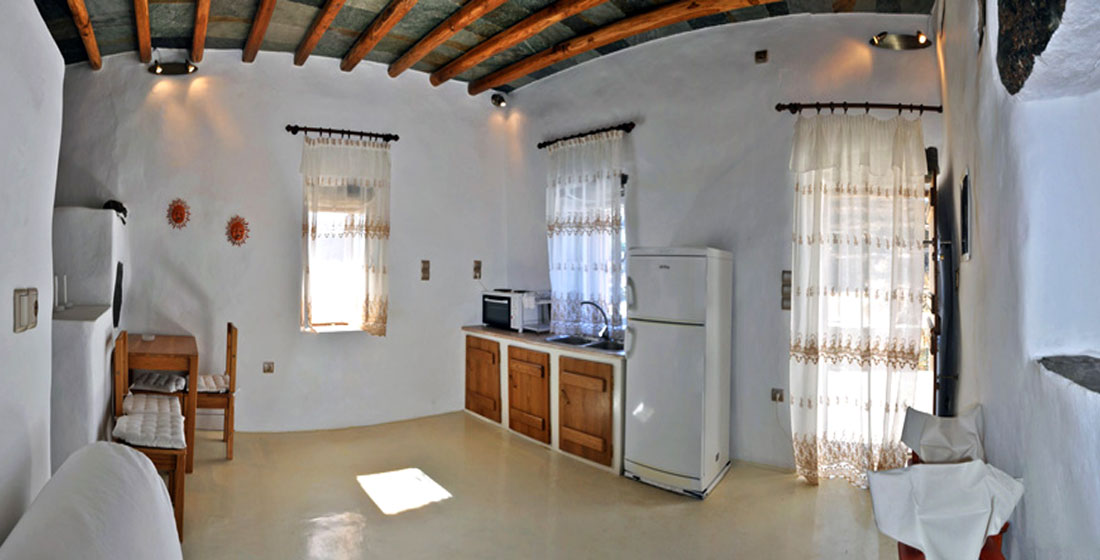 Accommodation
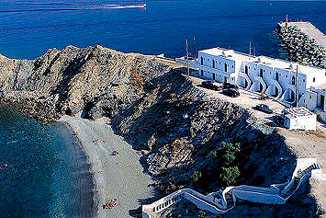 Accommodation
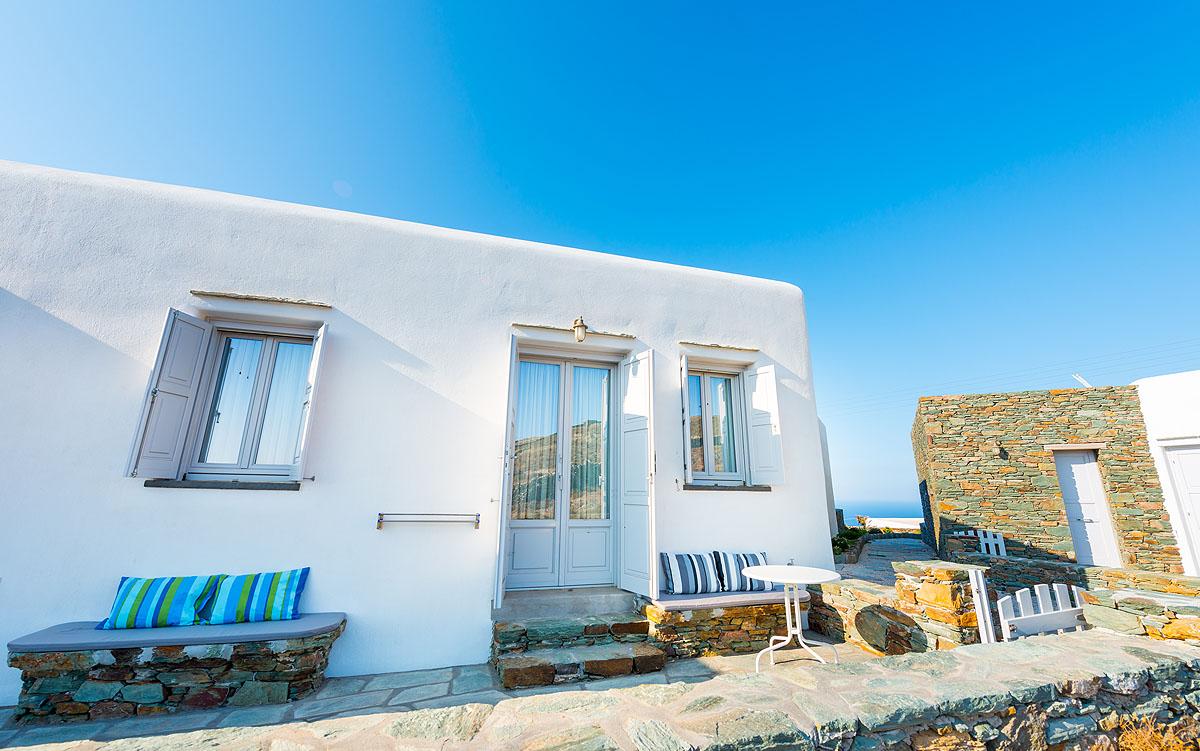 Accommodation
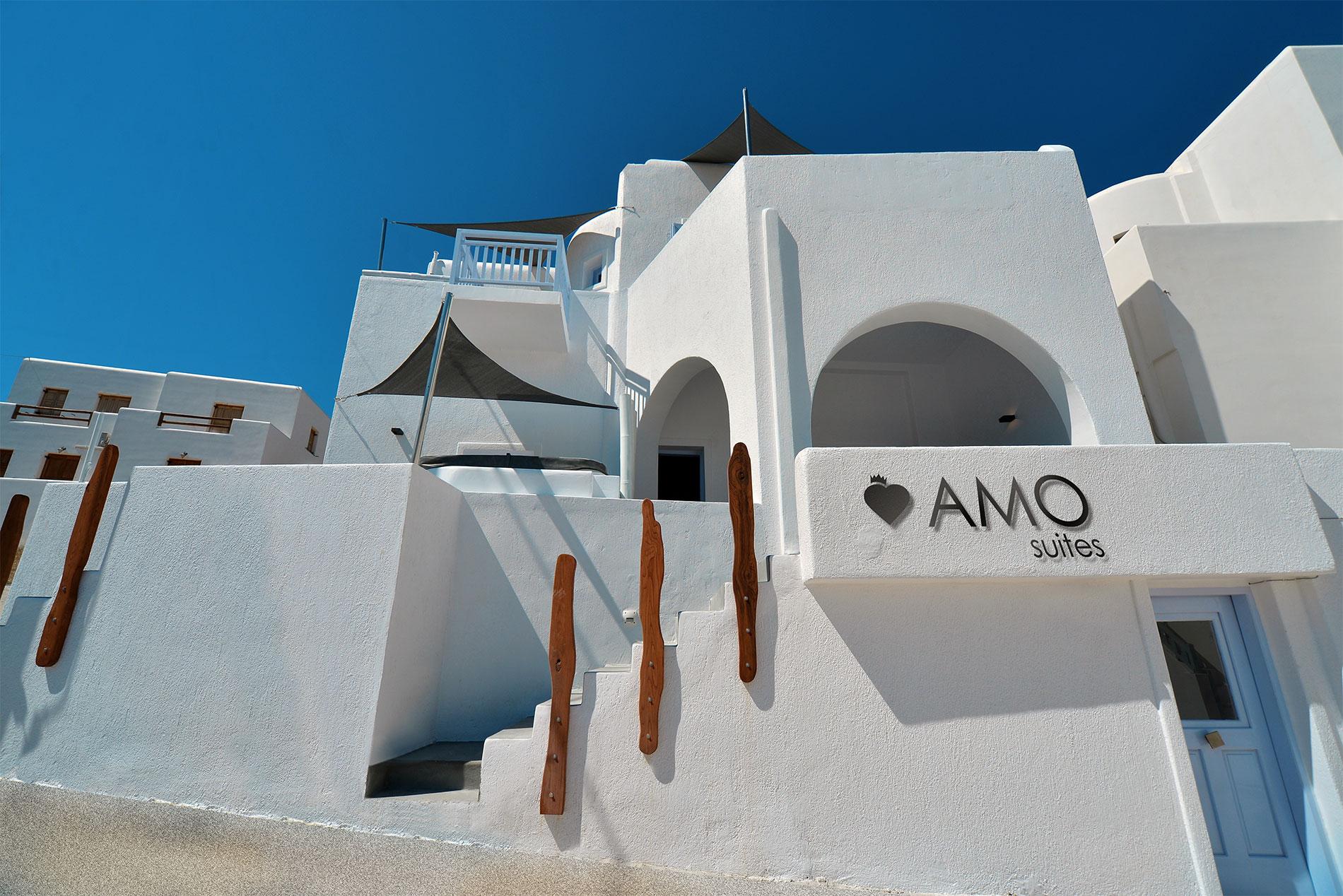 Accommodation
 Accommodation
 Accommodation
 Accommodation
 Accommodation
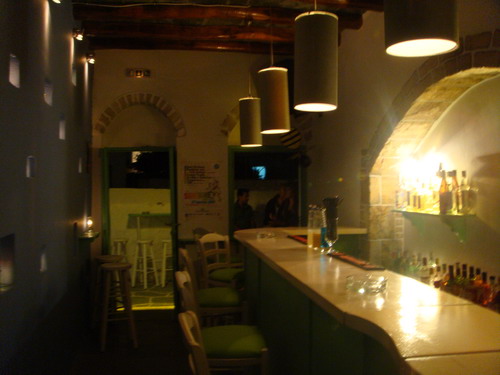 Entertainment
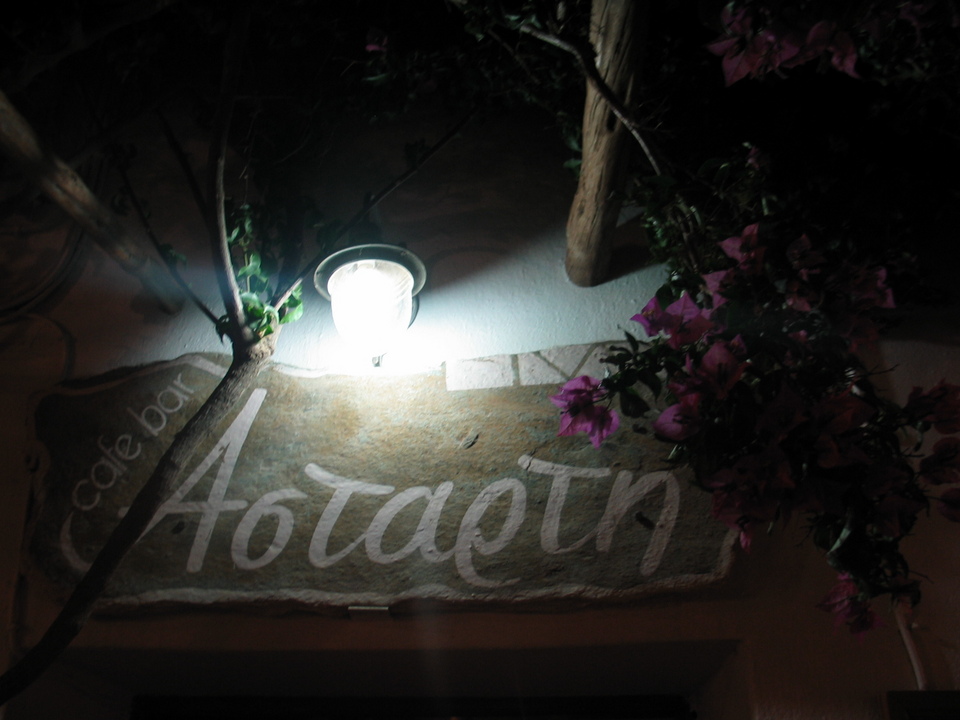 Entertainment
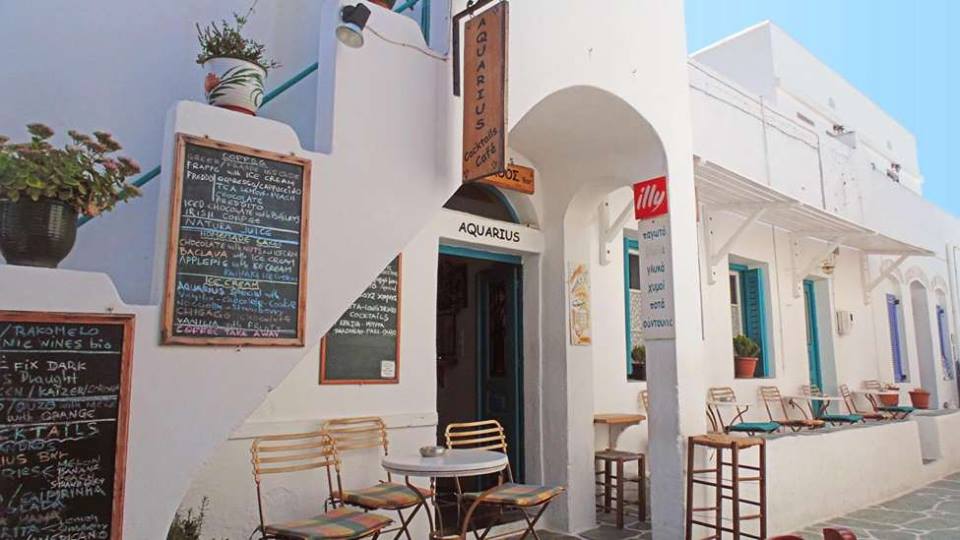 Entertainment
 Entertainment
 Entertainment
 Activities
 Local Products
 Local Products
 Local Products
 Local Products
The island's main organized beach, a sheltered bay with sand, pebbles and tavernas right by the water — also the starting point for nearby beaches on foot or by boat.
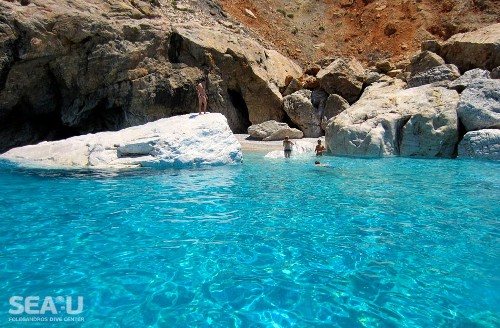
Folegandros's most striking beach, in the south — pebbles and deep turquoise waters in a wild landscape, accessible via a path or by boat from Karavostasi.
Opposite Angali, a quiet sandy beach with tamarisk trees, crystal-clear waters and a taverna — famed for its sunset, reached by path or boat.
A small, picturesque cove between Angali and Agios Nikolaos, with a little shade and calm waters — ideal for peace away from the crowds.
A secluded beach with pebbles and deep blue waters, a little beyond Agios Nikolaos, amid the greenery of a small valley with vineyards.
A secluded, quiet cove in the west, reached after a beautiful walk through rural landscape — a reward for those seeking absolute tranquility.
A quiet sandy beach near the port, at the foot of a valley with orchards — the most easily accessible cove for a swim near Karavostasi.
A small cove next to Karavostasi, easily reached on foot from the port — handy for a quick dip before or after the ferry.
A wild beach on the Ano Meria side, with pebbles and deep waters, accessible via a path through the rugged rural landscape of the north.
A secluded beach in the northwest, near Ano Meria, reached mainly by boat — pristine beauty for those who want to escape the crowds.
A wild, remote beach below Chora, with pebbles and deep waters, accessible by a steep path — for experienced hikers.
A large, quiet pebble beach at the northern end of the island, near Ano Meria, in a wild, untouched landscape.
A small, quiet cove in the Ano Meria area, with pebbles and clear waters, away from the crowds.
Folegandros has no airport. Its port, Karavostasi, is connected by ferry to Piraeus (about 4–9 hours, depending on the route) and to neighbouring islands such as Santorini, Ios, Sikinos, Milos, Naxos and Paros — ideal for island hopping in the Cyclades.
A local bus regularly connects Karavostasi with the Chora and Ano Meria. Many beaches can only be reached by path or boat, while renting a car or scooter helps for distances to the north and the starting points of hiking trails.
Combine Folegandros with the neighbouring Cyclades.
Plan your own trip to Folegandros, day by day, tailored to you — with the help of the aiTripPlanner.