Discover the Cyclades
Businesses, flavours and experiences across all the islands — choose a category.






Are you a business in the Cyclades?
List it for free and showcase it to thousands of visitors.
List now →
Businesses, flavours and experiences across all the islands — choose a category.
List it for free and showcase it to thousands of visitors.
List now →
Businesses, flavours and experiences across all the islands — choose a category.
List it for free and showcase it to thousands of visitors.
List now →
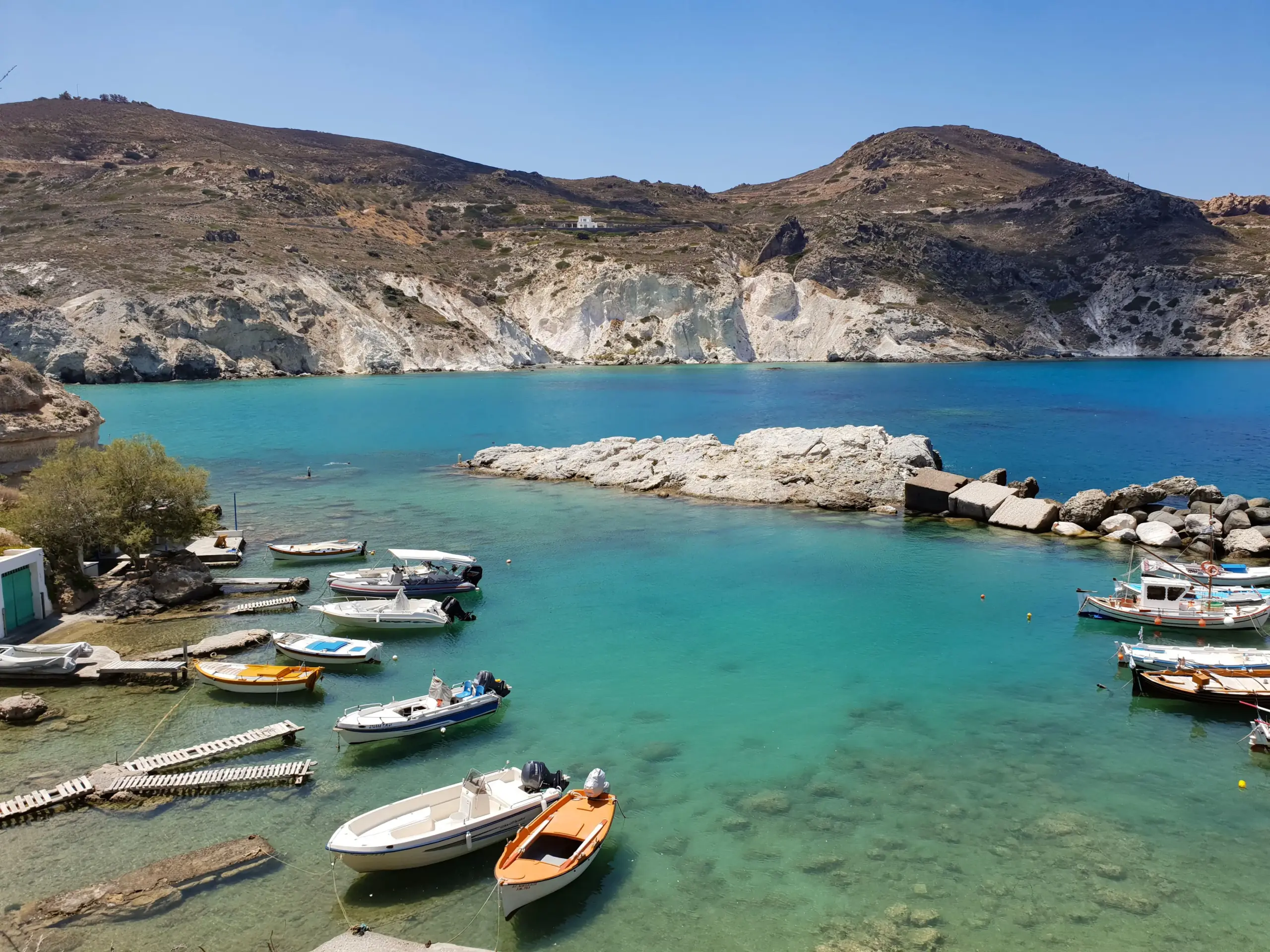
The island of colors and 75 beaches — volcanic landscapes in the Aegean
Milos has been inhabited since the Neolithic era thanks to its obsidian — the black volcanic glass that, sharp as a blade, became a valuable trade commodity across the Aegean and the Mediterranean long before the age of metals. The prehistoric settlement of Phylakopi rose to become a major center of Cycladic Civilization, with close contacts with Minoan Crete and Mycenaean Greece.
In classical antiquity Milos was independent and prosperous, a colony of the Dorian Spartans. In 416 BC, during the Peloponnesian War, the Athenians besieged and violently seized the island in the episode that Thucydides immortalized as the «Melian Dialogue» — a timeless text on the law of the strong.
In the early Christian centuries Milos became a refuge for the first Christians, who carved the impressive Catacombs. In the Byzantine and Venetian eras, the island, with its safe harbor, experienced both pirate raids and trading activity, while Plaka with its Castle became the fortified center.
In 1820, a farmer found in a field in Trypiti the Venus de Milo, one of the world's most famous sculptures, which ended up in the Louvre. Modern history was marked by mining activity — sulfur, kaolin, bentonite, perlite — which remains alive today, while in recent decades Milos has emerged as a top tourist destination thanks to its unique, colorful beaches.
Monasteries, castles, ancient towns and hiking routes.
The most important early Christian catacombs in Greece and among the most significant in the world (2nd–5th c.), an underground network of carved galleries with hundreds of tombs, where the first Christians gathered and buried their dead.
The marble Roman theater of the ancient city of Milos, built on a slope overlooking the sea and the harbor; it still hosts summer performances today.
An important prehistoric Bronze Age settlement with three successive phases of habitation, one of the centers of Cycladic Civilization, in the northeast of the island near Pollonia.
In Plaka, housing finds from Phylakopi, figurines, vessels and obsidian, as well as a faithful copy of the famous Venus de Milo (the original is in the Louvre).
In Adamas, dedicated to the island's centuries-long mining history — obsidian, sulfur, kaolin, bentonite, perlite — with tools, machinery and miners' testimonies.
In Plaka, housed in a traditional mansion, with local costumes, embroidery, tools and scenes of everyday life on Milos.
The abandoned sulfur mines at Paliorema, in the east — an impressive, almost otherworldly industrial landscape with rusted machinery by the sea.
The Venetian castle atop Plaka, with the church of Panagia Thalassitra at its summit and panoramic views over the entire bay of Adamas.
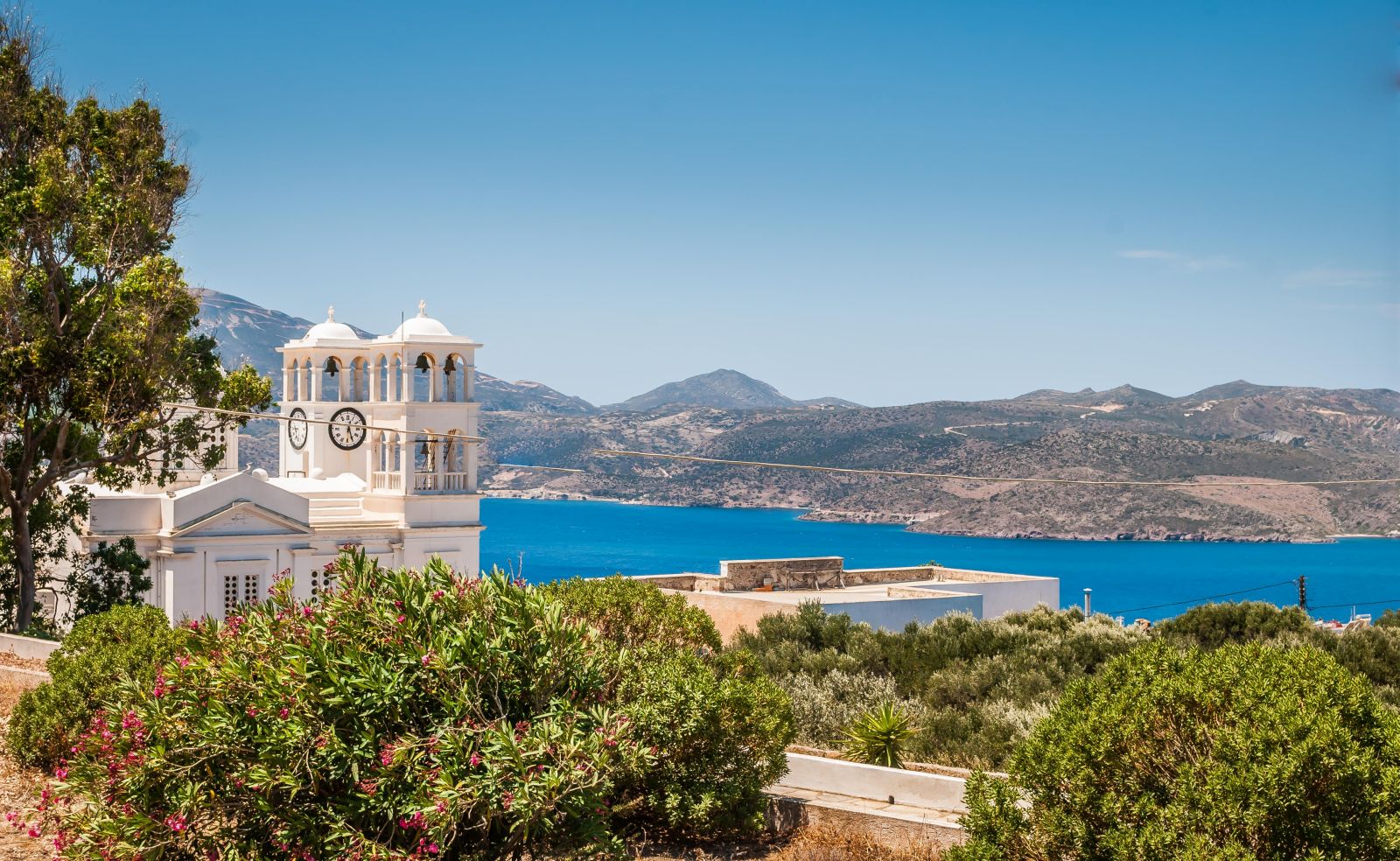
The cathedral of Plaka, built on the edge of the cliff, with the most renowned balcony for watching the sunset over the Aegean from Milos.
Striking geological phenomenon in the north: a deep cove with emerald waters hidden between vertical rocks, connecting to the open sea through a sea cave.
Near the ancient theater, in Trypiti, a marble plaque marks the field where in 1820 a farmer discovered the legendary statue of Venus.
In Adamas, housed in the church of Agia Triada, with rare Byzantine and post-Byzantine icons, sacred vessels and ecclesiastical heirlooms of the island.
In Adamantas, it tells the maritime history of the island — from obsidian tools and the Battle of Salamis to rare maps and the wooden caique 'Irini'.
Thermal healing springs in Adamantas, known since antiquity; their waters (28–90°C) are famed for their therapeutic properties.
Milos cuisine is built on local ingredients, seafood and traditional recipes passed down through generations — simple, flavorful, and tied to the island's land and sea.
Accommodation, restaurants, activities and local products of the island.
Locations come live from the official Cyclades business directory.
 Accommodation
 Accommodation
 Accommodation
 Accommodation
 Accommodation
 Accommodation
 Accommodation
 Accommodation
 Entertainment
 Entertainment
 Entertainment
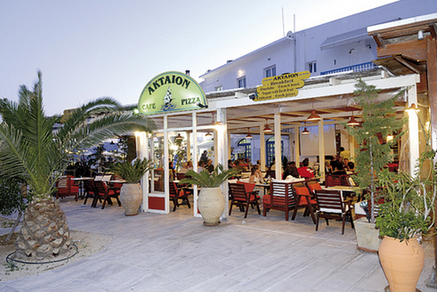 Entertainment
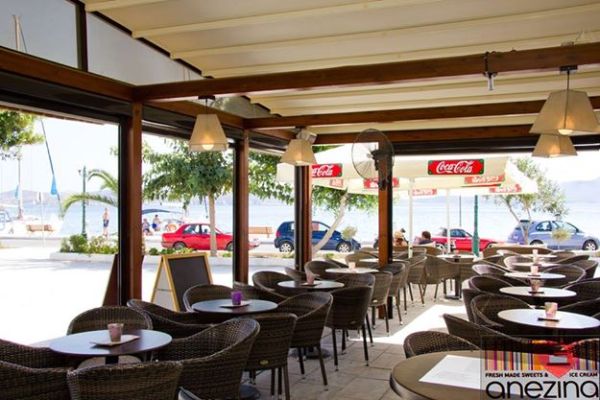 Entertainment
 Entertainment
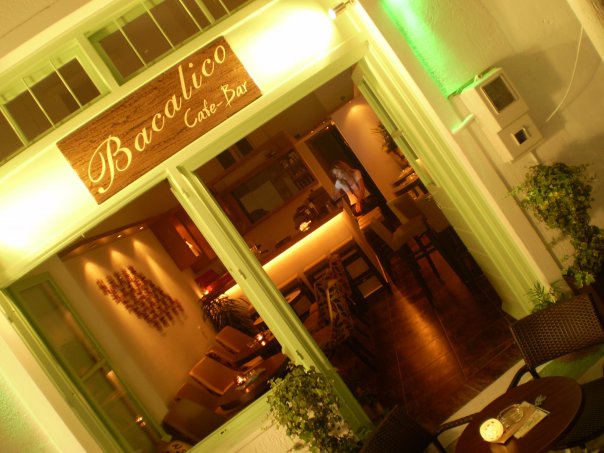 Entertainment
 Entertainment
 Activities
 Activities
 Activities
 Activities
 Activities
 Activities
 Local Products
 Local Products
 Local Products
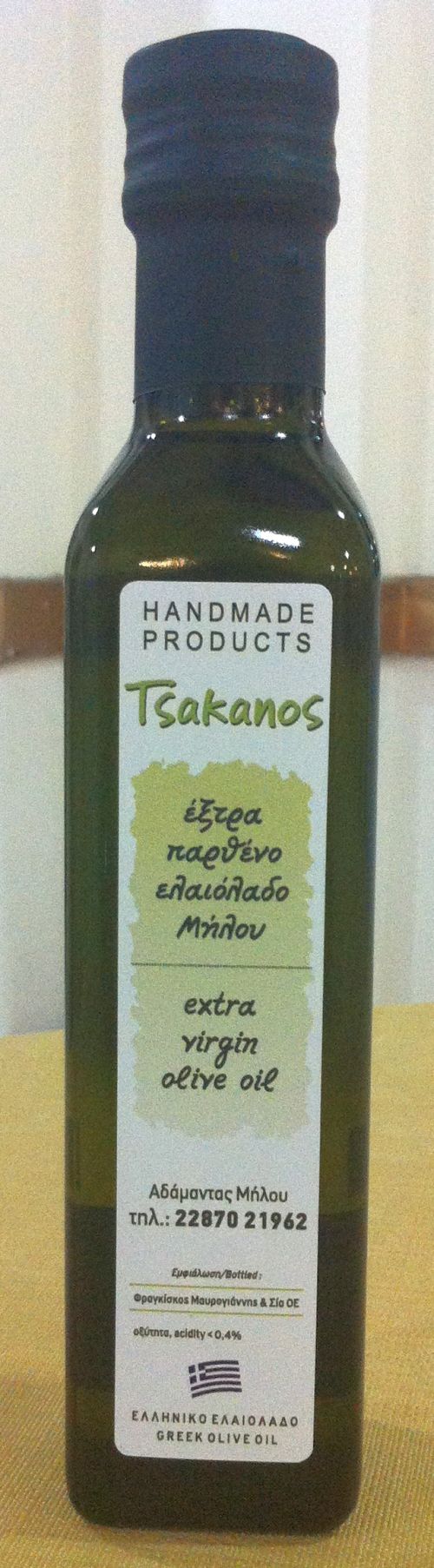 Local Products
The legendary lunar landscape with white rocks sculpted by the wind — the undisputed trademark of Milos.
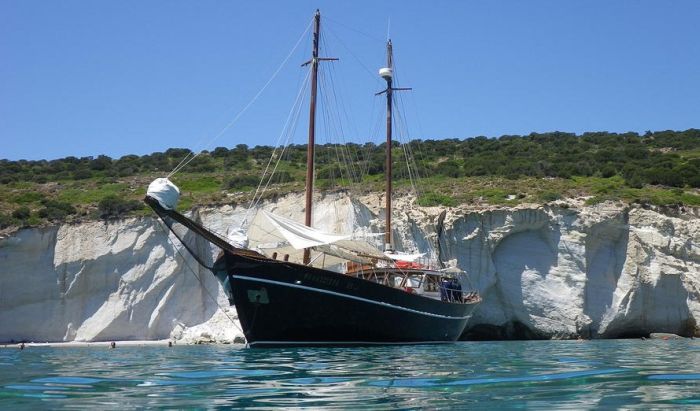
Impressive white rocks, arches and caves in turquoise waters, accessible only by sea.
Large organized beach with golden sand beneath imposing multicolored volcanic rocks in the south.
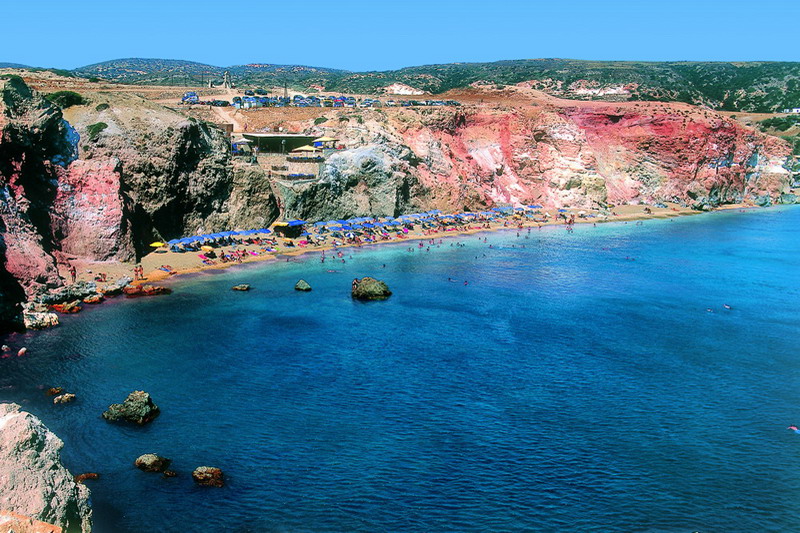
Striking beach with red, orange and white rocks and warm waters heated by volcanic activity.
Seaside settlement with soft golden-red sand and shallow waters, ideal for families.
Small hidden beach accessed through a narrow rock passage, with ropes and ladders — for the adventurous.
Beautiful organized beach in the south, with pebbles, clear waters and views of the colorful rocks.
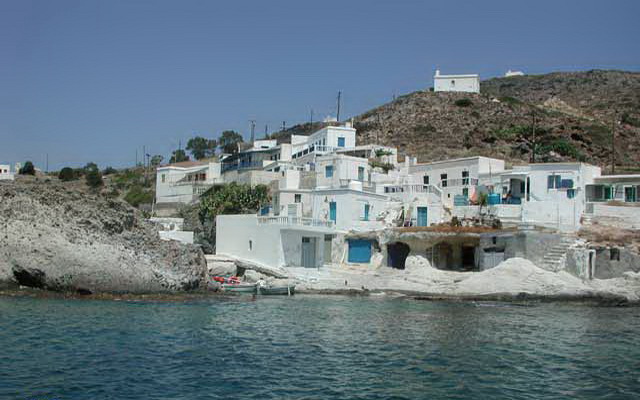
Picturesque fishing spot with white syrmata carved into the rock and crystal-clear waters, on the north coast.
Small cove hidden between tall rocks, with incredibly blue waters entering through a natural sea cave.
Sheltered sandy beach near Plaka, embraced by rocks — popular for sunset.
The island's largest sandy beach, in the bay of Adamas, next to Milos's unique lagoon.
Small picturesque cove in the north with fishermen's syrmata and shallow, calm waters, near Pollonia.
Three sandy coves with sea caves on the remote western coast — accessible mainly by sea.
Two isolated coves in the west, wild and beautiful; access is via dirt road or by boat.
A small sandy beach on the north coast with ropes and small boats, right next to the moon-like landscape of Sarakiniko.
A quiet pebble beach in the north with clear waters, far from the crowds.
An organized sandy beach near Adamantas, ideal for families, with taverns and easy access.
Milos has an airport with flights from Athens (~40′). By sea, the port of Adamas is connected to Piraeus (3–7 hours, depending on the vessel) and to the islands of the Western Cycladic arc (Sifnos, Serifos, Kimolos, Folegandros, Kythnos).
A local bus connects Adamas with Plaka and the main beaches. For the remote beaches, car or scooter rentals are essential, while for Kleftiko and touring around the island, boat trips by caique are the only option.
Combine Milos with the neighbouring Cyclades.
Plan your own trip to Milos, day by day, tailored to you — with the help of the aiTripPlanner.