Discover the Cyclades
Businesses, flavours and experiences across all the islands — choose a category.






Are you a business in the Cyclades?
List it for free and showcase it to thousands of visitors.
List now →
Businesses, flavours and experiences across all the islands — choose a category.
List it for free and showcase it to thousands of visitors.
List now →
Businesses, flavours and experiences across all the islands — choose a category.
List it for free and showcase it to thousands of visitors.
List now →
Calm in crystal-clear waters — and an emerging gastronomic destination
Iraklia has been inhabited since deep antiquity and always belonged to the sphere of influence of neighboring Naxos. Its name is attributed to the hero Heracles, while the ruins of the Hellenistic tower above Livadi attest to organized habitation and fortification already from ancient times. The Cave of Ai-Giannis appears to have been known and used for worship since ancient times.
During Roman and Byzantine times the island followed the fate of the surrounding Cyclades. After the Fourth Crusade and the fall of Constantinople (1204), Iraklia was incorporated into the Venetian Duchy of the Aegean, based in Naxos.
During the years of piracy, like most small Aegean islands, Iraklia was almost completely deserted: the inhabitants abandoned the coasts to escape the raids. For long periods the island remained uninhabited, used only for grazing and cultivation by residents of Naxos and Amorgos.
Permanent resettlement came in the 19th century, when families mainly from Amorgos and Naxos settled on the island, living from livestock farming, agriculture and fishing. Today Iraklia, with very few permanent residents, remains one of the most untouched and authentic islands of all the Cyclades.
Monasteries, castles, ancient towns and hiking routes.
The largest cave in the Cyclades, on the southern foothills of the island. Large chambers with impressive stalactites and stalagmites hide within, while at the entrance stands the chapel of Agios Ioannis, where the island's great festival takes place every August 28th.
Above Livadi beach lie the ruins of an ancient Hellenistic fortified tower, testimony to the island's habitation and strategic importance in antiquity.
The highest point on Iraklia (approximately 419m). The marked trail to the summit rewards the hiker with unlimited views over the Small Cyclades, Naxos and Amorgos.
An impressive deep bay with vertical cliffs exceeding 100 meters — a refuge for birds of prey and one of the wildest landscapes on the island.
The central church in the upper settlement of Panagia (Chora), which gave the settlement its name, with panoramic views over the sea.
The church that dominates the port settlement of the same name and celebrates the island's patron saint.
On the hills around the settlements lie the ruins of old stone windmills, a reminder of rural life in past centuries.
An extensive network of marked stone paths crosses the whole island, connecting the settlements, the cave, the summit of Mount Papas and the remote beaches.
Scattered across the untouched interior, the white chapels stand among the dry-stone walls and mark the hikers' trails.
A more recent church dedicated to Saint Nektarios, in the settlement of Agios Georgios, overlooking the harbor.
Iraklia's cuisine is simple and authentic, based on local livestock products, vegetables from small gardens, and fresh fish brought daily by the few boats.
Accommodation, restaurants, activities and local products of the island.
Locations come live from the official Cyclades business directory.
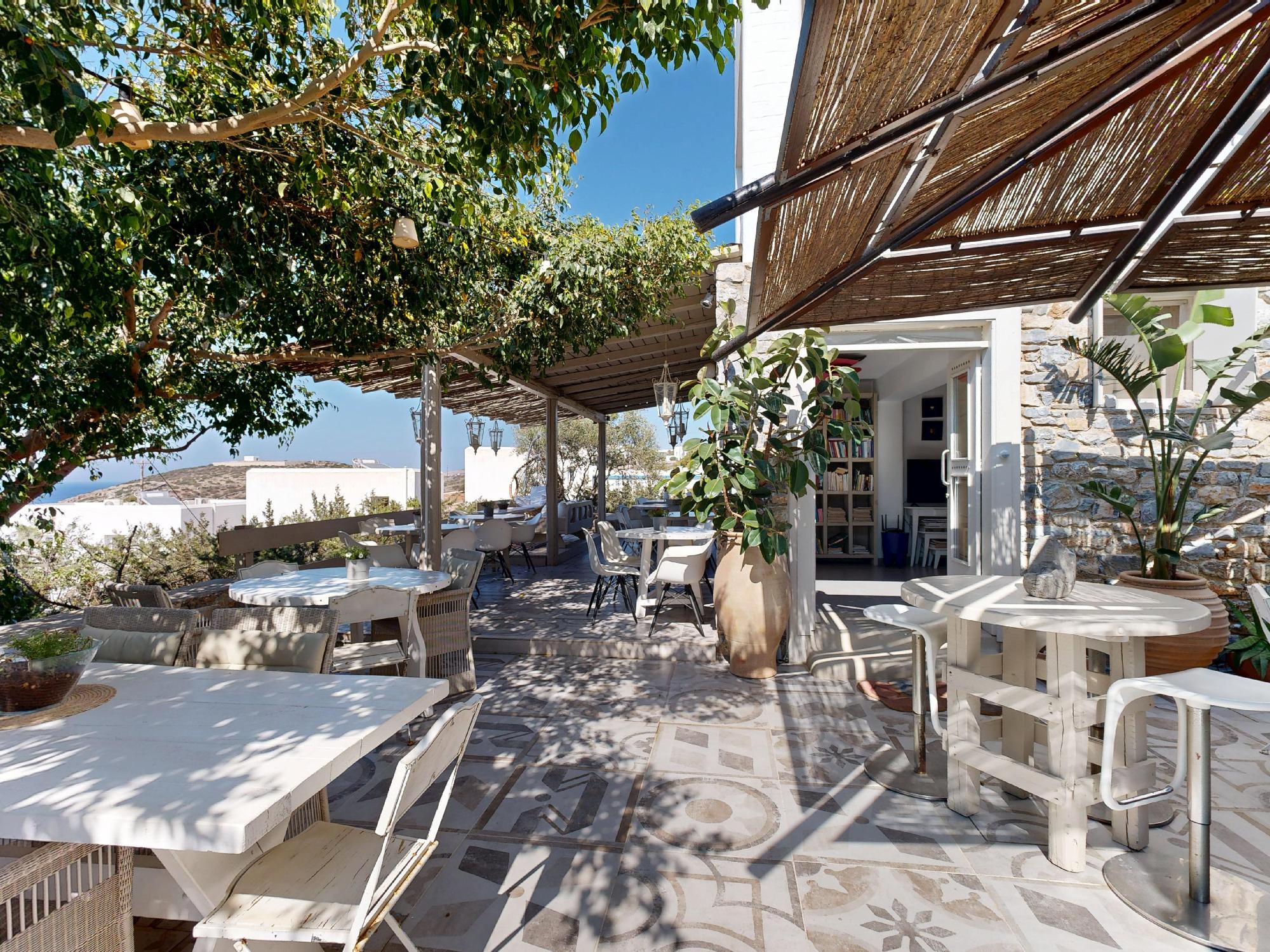 Accommodation
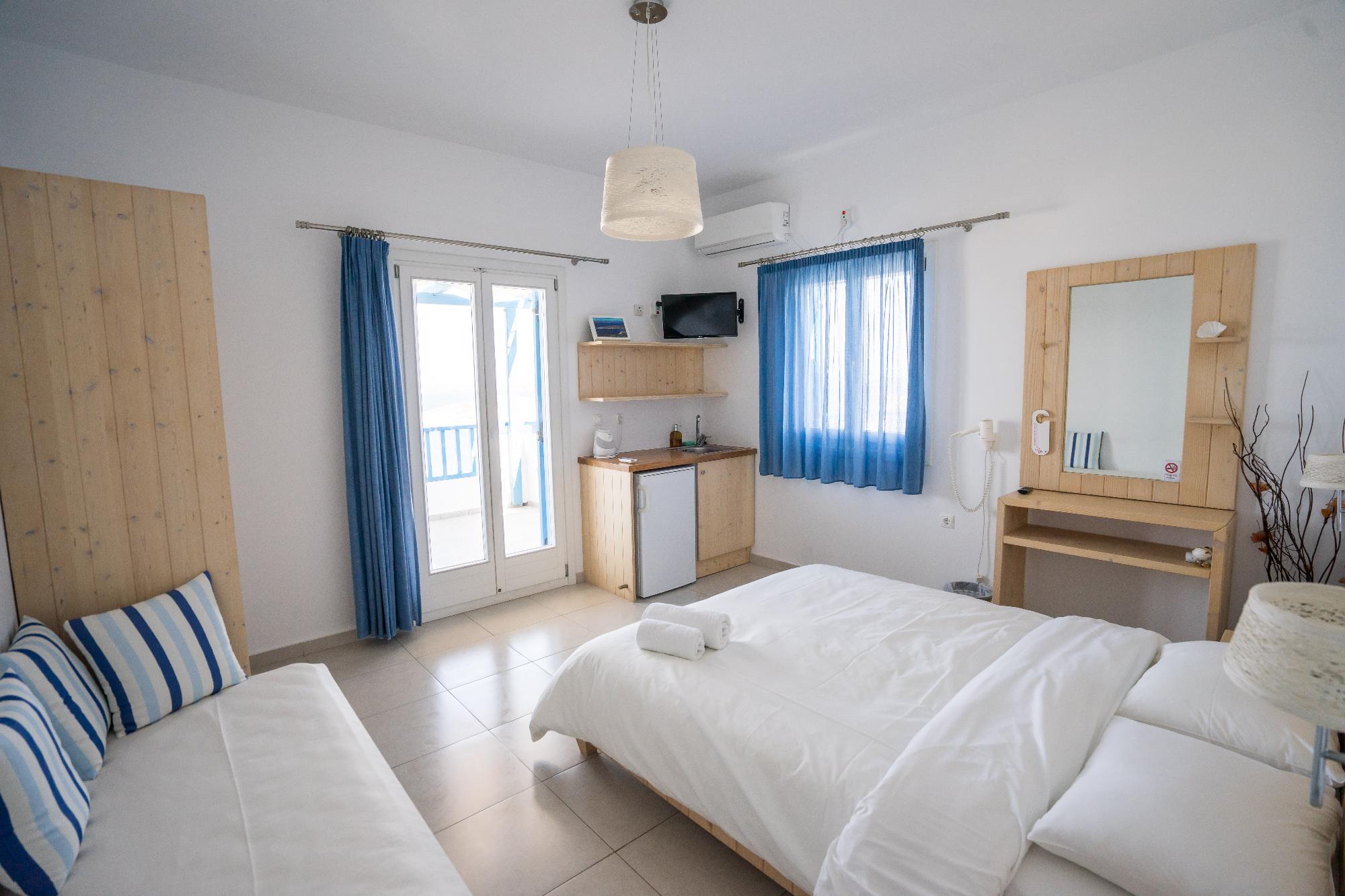 Accommodation
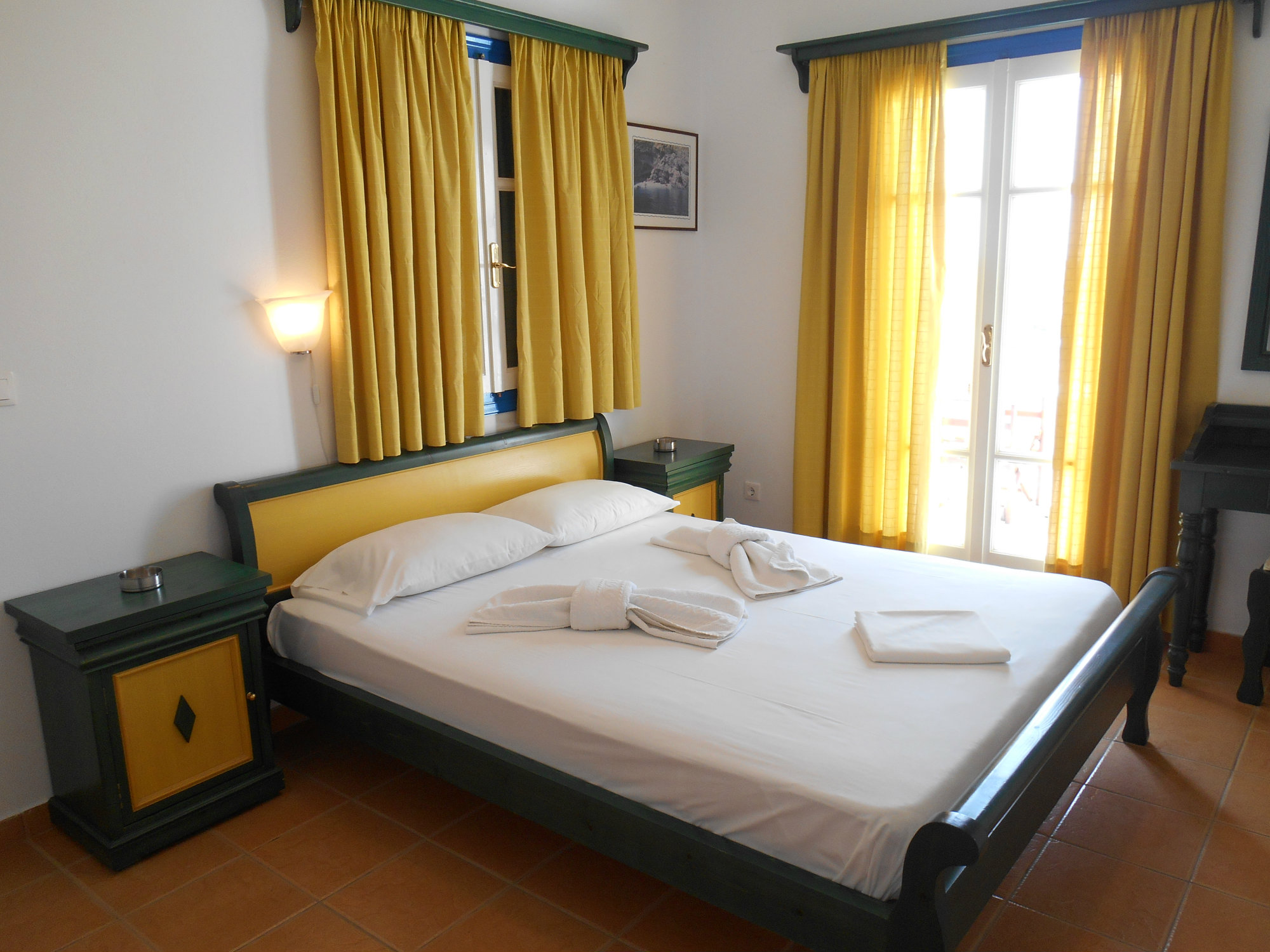 Accommodation
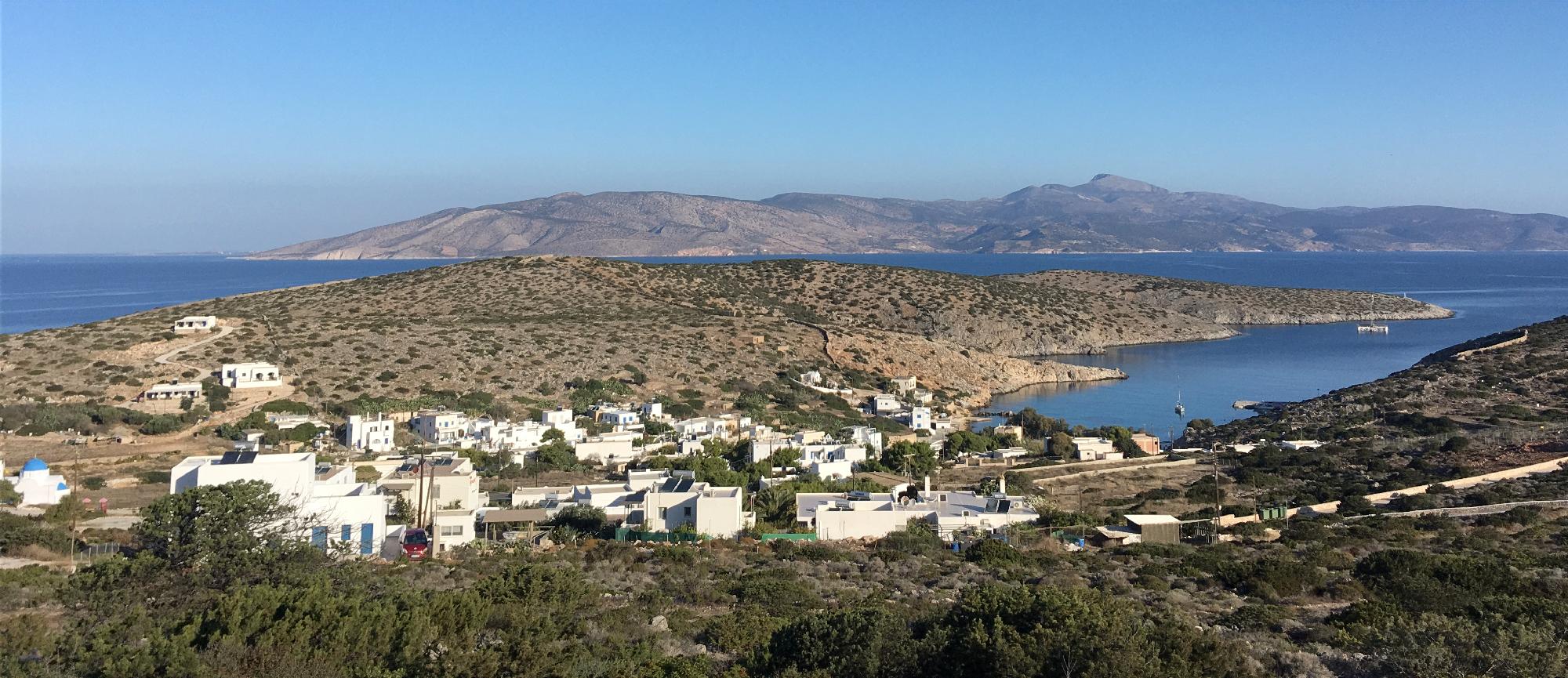 Accommodation
 Accommodation
 Accommodation
 Accommodation
 Accommodation
 Entertainment
 Entertainment
The largest and most beautiful beach on the island, with golden sand and shallow, turquoise-green waters, a few minutes' walk from the port — overlooked by the ruins of an ancient tower.
The sandy beach within the port, calm and sheltered, with shallow waters ideal for children and tavernas right by the water.
Iraklia's most exotic beach, on the south coast, with white sand and incredibly clear, turquoise waters — reached by boat or a long trail.
A secluded, hidden cove with pebbles and clean waters, approached via a hiking trail — ideal for absolute peace.
A small, quiet beach near Livadi, with sand and shallow waters, without facilities — for a calm swim away from the crowds.
A wild, isolated beach on the north side of the island, with pebbles and deep, crystal-clear waters, for explorers who aren't afraid of solitude.
A small cove at the foot of the imposing cliffs of Merichas bay, with pebbles and pristine waters — accessible mainly by boat.
A remote, wild pebble beach with deep, crystal-clear waters, far from the settlements.
A quiet, open sandy beach with golden sand and shallow waters, on the calmest stretch of the coast.
Iraklia has no airport. The port at Agios Georgios is served by the local Small Cyclades boat (the Naxos–Koufonisia–Schinoussa–Iraklia–Amorgos line) as well as by ferry routes connecting it with Piraeus via Naxos, a few times a week.
The island is small and getting around is mainly on foot, via the network of trails; during the summer months a small local vehicle connects the port with Panagia, while for remote Alimia there is a boat.
Combine Iraklia with the neighbouring Cyclades.
Plan your own trip to Iraklia, day by day, tailored to you — with the help of the aiTripPlanner.