Discover the Cyclades
Businesses, flavours and experiences across all the islands — choose a category.





Are you a business in the Cyclades?
List it for free and showcase it to thousands of visitors.
List now →
Businesses, flavours and experiences across all the islands — choose a category.
List it for free and showcase it to thousands of visitors.
List now →
Businesses, flavours and experiences across all the islands — choose a category.
List it for free and showcase it to thousands of visitors.
List now →
The Gibraltar of the Aegean — a mysterious monolith on the route of the Argonauts
The island's very name was born of myth: when the Argonauts, returning from Colchis, were endangered by a terrible storm in the night, Apollo cast his arrow and made an island "appear" out of the sea for them to find shelter — Anafi. In gratitude they founded a sanctuary to Apollo Aiglitis, whose worship the island kept alive for centuries.
In antiquity Anafi was a small but organized Doric city, with an acropolis at the site of Kasteli and the important sanctuary of Apollo Aiglitis at the foot of Kalamos. During the Hellenistic period it came for a time under the influence of the Ptolemies of Egypt, while remains of walls, sarcophagi and temples attest to continuous life through the Roman and early Christian periods.
After the Byzantine period, the island was incorporated into the Duchy of the Aegean founded by Marco Sanudo in the 13th century, and passed into the hands of Venetian families; from that era survive the ruins of the castle above Chora. In 1537 Anafi, like the rest of the Cyclades, was subjugated to the Ottoman Empire, yet retained its isolated, agricultural character.
The island was incorporated into the Greek state after the Revolution of 1821. In more recent times, the renowned builders of Anafi built, in Athens beneath the Acropolis, the picturesque neighborhood of Anafiotika, carrying over their island's architecture. During the same period, Anafi's isolation made it a place of political exile, while today its economy relies on small-scale farming, livestock and gentle, alternative tourism seeking its serenity.
Monasteries, castles, ancient towns and hiking routes.
Anafi's most important pilgrimage site, with an old monastery at the foot and a newer one perched on the very summit of Kalamos. The climb rewards with a breathtaking view over all the Cyclades, and every year it fills with pilgrims for the feast of the Virgin.
The enormous solid limestone rock (about 460m), one of the largest monoliths in the Mediterranean, towering at the island's eastern tip — Anafi's landmark and a destination for hikers.
The historic monastery at the foot of Kalamos, built upon the ruins of the ancient temple of Apollo Aiglitis. Ancient marble fragments can be seen embedded in its walls, testimony to the continuity of worship at the same sacred site.
The remains of the ancient sanctuary that, according to myth, the Argonauts founded in honor of Apollo who "revealed" the island to them. The Monastery of Zoodochos Pigi was later built upon it.
The hill above Chora and Roukounas, where the ancient city of Anafi once stood. Sections of walls, sarcophagi, carved tombs and scattered architectural remains from Hellenistic and Roman times survive.
The snow-white capital with its vaulted houses and cobbled lanes, crowned at its summit by the ruins of the Venetian castle — a reminder of the era of the Duchy of the Aegean.
The site of Anafi's ancient harbor, on the southern coast, with rock-cut tombs and traces of the island's ancient maritime life.
The network of traditional cobbled paths connecting Chora with the beaches, the chapels and Kalamos — a living heritage and the best way to get to know the island.
Dozens of snow-white chapels scattered across the countryside, such as Agioi Anargyroi and Agios Nikolaos, set the rhythm of Anafi's religious and communal life.
The ruins of a medieval tower-castle on the southwestern side of the island, a lookout against pirate raids with views over the open sea.
A cave with stalactites and stalagmites in the island's interior, wrapped in legends of dragons — one of Anafi's hidden natural wonders.
The highest point of Anafi (584 m), where traces of medieval beacon towers survive — a spot with panoramic views over the whole island and the Aegean.
Anafi's archaeological collection, with sculptures, inscriptions and finds from the ancient city at Kasteli and the sanctuary of Apollo Aigletis.
IN THE SOUTHEASTERN PART OF THE CYCLADES, the small and barren Anafi with fewer than 300 inhabitants remains a forgotten paradise in every respect. It takes some effort and sometimes trouble for visitors to reach the island, as the routes and schedules of the remote line are not the most convenient. However, any inconvenience is worth it, as you are rewarded from the very first moment. Its isolation has served as a ark of a culture that on other islands with more tourism tends to disappear. Here, at the bakery that also functions as a post office, you will find zaforista rusks, bread, pies, and sweets; at the grocery store, local olives, pickles, and cheeses; and at the tavernas, fresh fish, handmade pasta, vegetables from the garden, and aromatic fruits.
Accommodation, restaurants, activities and local products of the island.
Locations come live from the official Cyclades business directory.
 Accommodation
 Accommodation
 Accommodation
 Accommodation
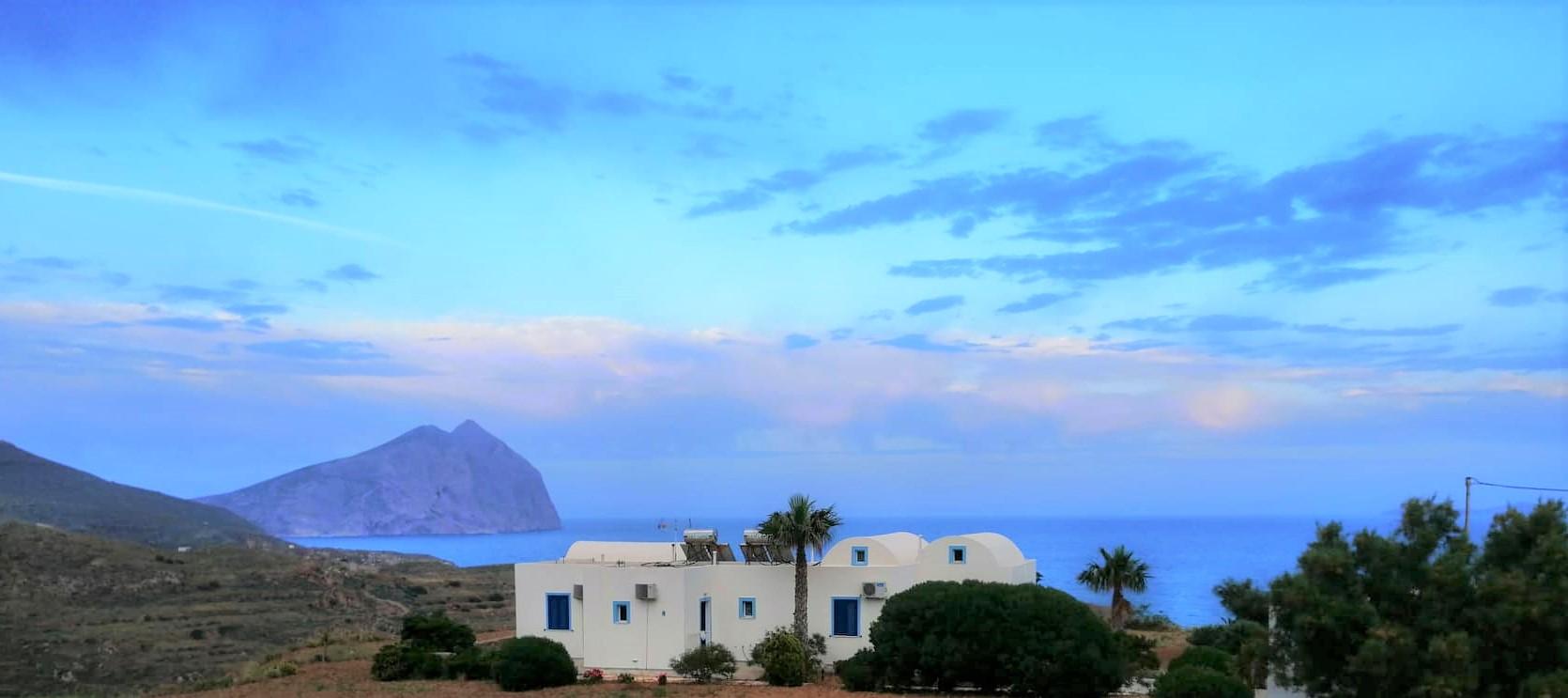 Accommodation
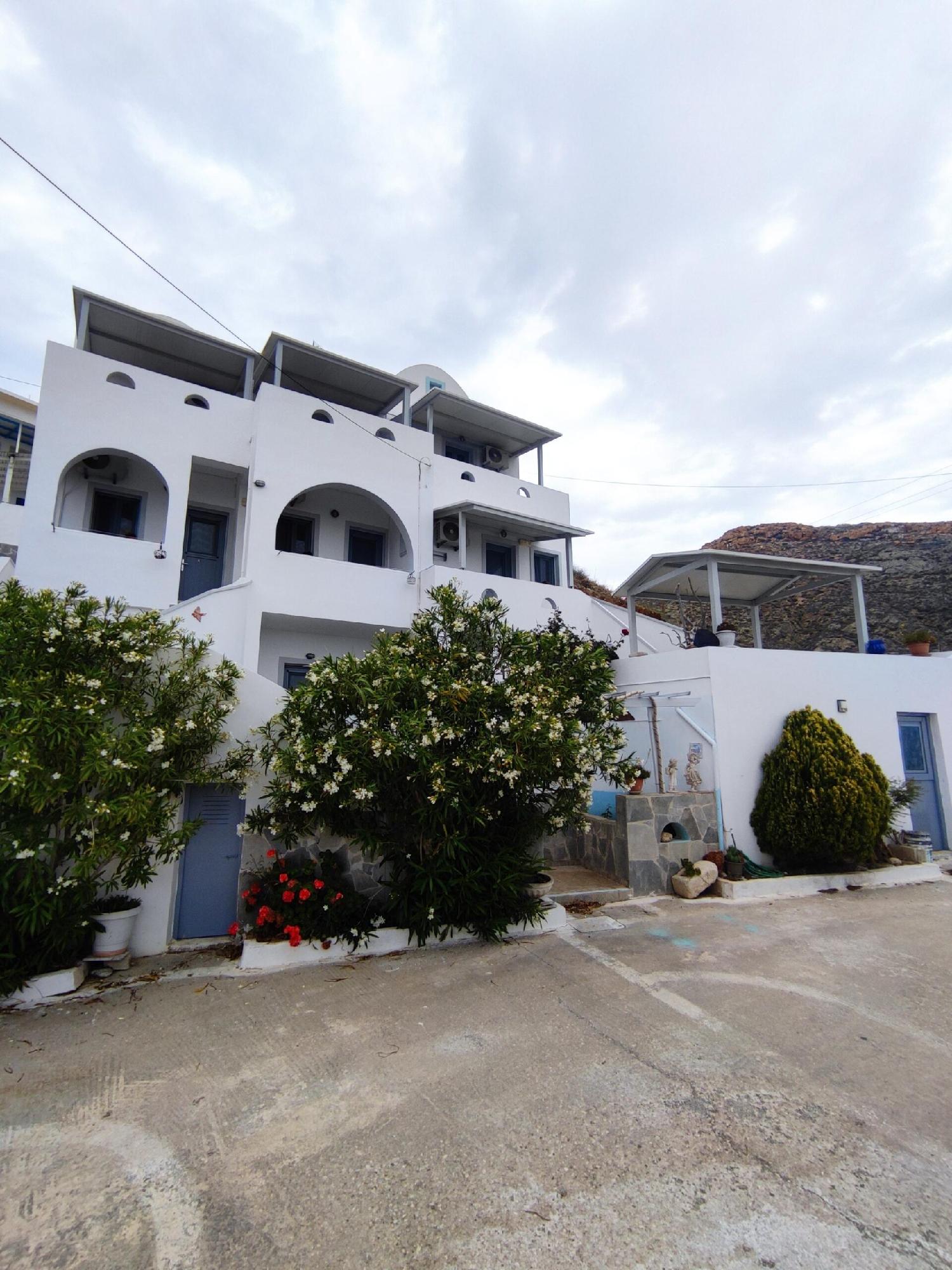 Accommodation
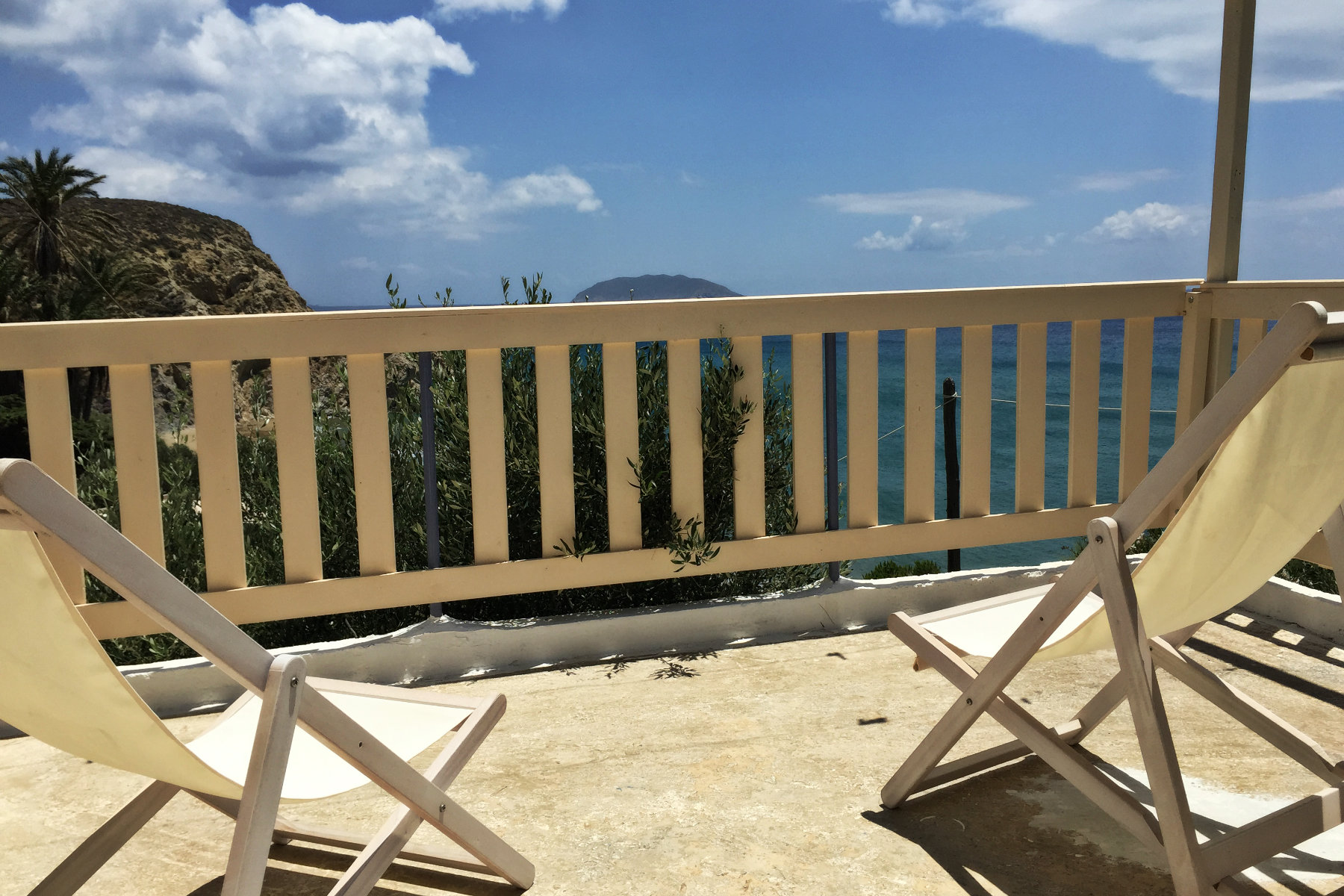 Accommodation
 Accommodation
 Entertainment
 Local Products
The closest beach to the port and the most popular one, with golden sand, shallow waters and some organization — ideal for a first swim.
Small, serene sandy beach between Klisidi and Roukounas, with clear waters and few crowds.
The island's largest and most beautiful beach — an expansive golden shore with dunes and tamarisk trees, at the foot of Kalamos.
Quiet sandy beach next to Roukounas, with an access path and a sense of seclusion.
Wild, secluded sandy beach to the east, where the ravine meets the sea — pristine scenery far from everything.
Secluded pebble beach with clear, deep waters, toward the island's eastern tip.
Quiet sandy beach near Zoodochos Pigi and Kalamos, at the eastern edge — serenity and a view of the monolith.
Small, secluded cove with sand and pebbles next to the chapel of the same name, ideal for absolute peace.
A small, quiet sandy cove next to Megalos Roukounas, with golden sand and shallow waters, more secluded and calm.
Anafi has no airport. The port of Agios Nikolaos is connected by ferry to Piraeus (about 6–10 hours), usually via Santorini and other Cycladic islands — sailings are sparser in winter, so it's worth checking schedules in advance.
The island is small; a local bus connects the port with Chora and nearby beaches such as Roukounas. For the more remote beaches and Kalamos, access is by path or by boat — hiking here is a way of life.
Combine Anafi with the neighbouring Cyclades.
Plan your own trip to Anafi, day by day, tailored to you — with the help of the aiTripPlanner.